How RFK Jr. is perpetuating myths that maintain white supremacy and bad history

The issue of Confederate statues is once again in the news, this time thanks to independent presidential candidate Robert F. Kennedy Jr. The notorious anti-vaccine advocate appeared on conservative podcaster Tim Pool’s show alongside far-right commentator Hannah-Claire Brimelow, where Kennedy said that he got a “visceral reaction against” the removal of the statue of the Robert E. Lee statue in Charlottesville, Virginia. His argument, which is often repeated by defenders of Confederate monuments, betrays a gross misunderstanding about the nature of the historical memory of the Confederacy and the Confederate monuments themselves.
What RFK Jr. said and why it’s a problem
RFK Jr. has been working hard to draw attention to himself, so, unsurprisingly, he would go on Tim Pool’s show. Pool has a large audience of nearly two million subscribers, making it easier for him to spread his message where he otherwise would be unable to. However, it is not the show itself that is the problem. Instead, it is his appeal to the Lost Cause. During the show, RFK Jr. not only expressed frustration with the removal of the Lee monument but sympathy for the Confederate soldiers who waged war against the United States, saying: “There were heroes in the Confederacy who didn’t have slaves and, you know, I just, I just have a visceral reaction against destroying history. I don’t like it. I think we should celebrate who we are.”
This is problematic for a variety of reasons. One that comes to mind is the idea of celebrating historical figures who fought for slavery against the United States itself. And make no mistake, the Confederacy fought to preserve slavery. Under the Confederate constitution, slavery was not only legal but protected. One section made this painfully clear, saying:
The Confederate States may acquire new territory; and Congress shall have power to legislate and provide governments for the inhabitants of all territory belonging to the Confederate States, lying without the limits of the several Sates; and may permit them, at such times, and in such manner as it may by law provide, to form States to be admitted into the Confederacy. In all such territory the institution of negro slavery, as it now exists in the Confederate States, shall be recognized and protected be Congress and by the Territorial government; and the inhabitants of the several Confederate States and Territories shall have the right to take to such Territory any slaves lawfully held by them in any of the States or Territories of the Confederate States.
Confederate Constitution, Article 4 Section 3 Subsection 3, 1861.
Even without the specifics of the CSA’s Constitution, statements by the very leaders of the Confederacy make their goals perfectly clear. Robert E. Lee himself, despite the mythology of his gentile disposition, was a ruthless slave owner who, despite claiming he would free his slaves to secure the union, also argued that slavery was a burden on the white populace and a burden they had to uphold to ‘civilize’ Black people. He made this perfectly clear in a letter to his wife in 1856, in which he wrote, “…the painful discipline they are undergoing, is necessary for their instruction as a race, & I hope you will prepare & lead them to better things.” Others were more emphatic in their support for slavery, with Vice President of the Confederacy, Alexander Stephen, saying in a speech in 1861 that the Confederacy’s “…foundations are laid, its corner-stone rests, upon the great truth that the negro is not equal to the white man; that slavery subordination to the superior race is his natural and normal condition.” While it is certainly true not all Confederate soldiers owned slaves, they were all part of an enterprise to preserve the institution of slavery, and they knew it.
They not only went so far as to fight for slavery but openly wrote and spoke about their pro-slavery motivations. In one instant, Private Lunsford Yandell, Jr. of the Kentucky Cavalry asserted his strong support for slavery, saying, “The vandals of the North are determined to destroy slavery…. We must all fight, and I choose to fight for southern rights and southern liberty…” Another soldier, Lieutenant William Nugent of the 28th Mississippi Infantry, reiterated that position, warning that “This country without slave labor would be completely worthless. We can only live and exist by that species of labor; and hence I am willing to fight to the last.” These two were not extreme by any imagination either. Letter after letter demonstrates that many Confederates either joined to fight for the preservation of slavery or were not opposed to its preservation at the expense of the Union. Even those who were drafted shouldn’t be celebrated as the reason for their conscription was directly tied to the institution of slavery itself through the Confederacy’s goals.
For RFK Jr. to attempt to celebrate this history as if it is an honorable thing to fight for the Confederacy is an absurdity that betrays not only an unwillingness to examine the past critically but also a desire to create mythologies around concrete and observable historical phenomena and this is especially true when it comes to RFK Jr.’s view of Confederate statues.
So, about those statues
The relationship that America has with Confederate monuments is a complex but important one. As I have noted previously, the memory that an unfortunate portion of the American public has of the Confederacy is one largely based on the Lost Cause myth. The Lost Cause myth, which I addressed previously, asserts that the Civil War wasn’t about slavery and is as much a pernicious lie as it is a racist pseudo-history. By promoting the states’ rights narrative, former confederates and confederate sympathizers worked to paint the South and its racial supremacy in a more gentile light.
This, in turn, allowed former Confederates to reiterate and maintain white supremacy. As they forced out African Americans from public office and denied them their rights, they raised statues to their favorite Confederate figures, each of them being a symbol of the white supremacist resurgence that came with the failure of Reconstruction. As I noted previously:
… supporters of the Lost Cause glorified various figures from the war as symbols of Southern valor and prowess. Lee was foremost among these mythical figures. Edward Bonekemper’s The Myth of the Lost Cause: Why the South Fought the Civil War and Why the North Won (2015) rightfully takes a shot at this valorization, noting that Lee had higher casualty rates than his victorious Northern rival, Ulysses S. Grant. But that did not stop many of these pro-confederate activists from making him into a symbol.
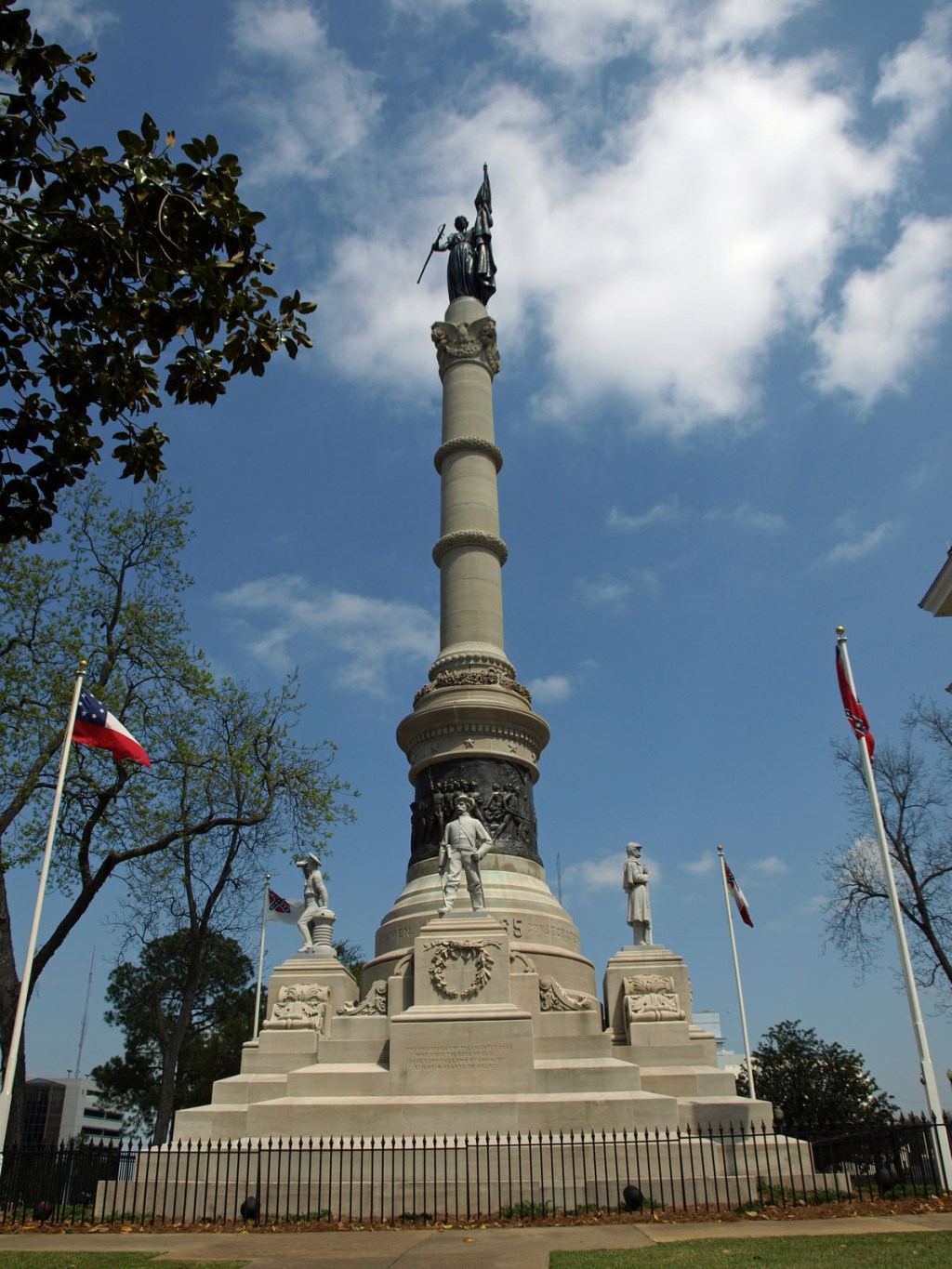
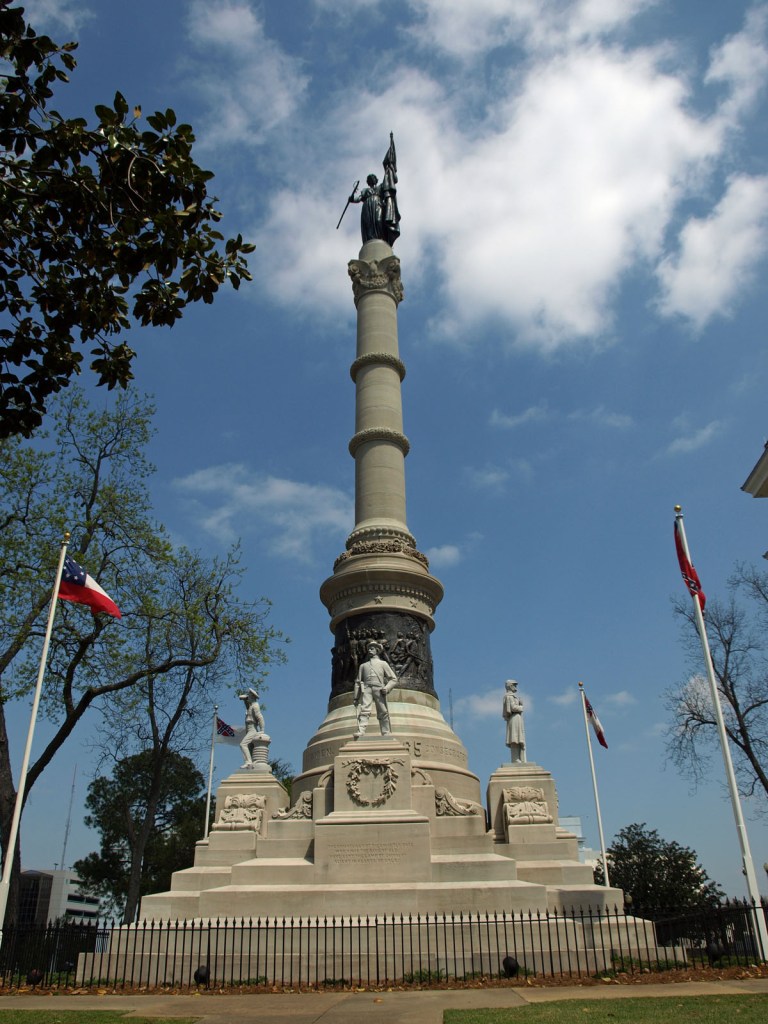
From the very end of the war onward, the Confederacy’s memory has been polluted by these monuments. The very purpose of these statues was a celebration at the expense of truth and at the expense of the well-being of African Americans who were forced to look upon symbols of their subjugation. Even as the Lee statue was still standing, white supremacists fought tooth and nail to hold onto their fantasy of racial supremacy, killing Heather Heyer in the process. The Confederate statues and, by extension, all of the symbols associated with them are tied to racial violence. Failing to acknowledge that will not make our historical memory any more accurate. It will only pollute our outlook on the future, and if RFK Jr. is serious about being the President of the United States, then he has to acknowledge that.
If you like my work and want to support me, you can find the donation site through my Kofi account. I really appreciate it.
Bibliography
Alfaro, Mariana. 2024. “RFK Jr. Had a ‘Visceral’ Reaction to Tear-Downs of Confederate Statues.” Washington Post, May 28, 2024. https://www.washingtonpost.com/politics/2024/05/28/rfk-jr-confederate-statues/.
Armus, Teo, and Hadley Green. 2023. “Charlottesville’s Lee Statue Meets Its End, in a 2,250-Degree Furnace.” Washington Post, October 26, 2023. https://www.washingtonpost.com/dc-md-va/interactive/2023/civil-war-monument-melting-robert-e-lee-confederate/.
“Avalon Project – Constitution of the Confederate States; March 11, 1861.” n.d. Accessed May 29, 2024. https://avalon.law.yale.edu/19th_century/csa_csa.asp.
Heim, Joe. 2017. “How a Rally of White Nationalists and Supremacists at the University of Virginia Turned into a ‘Tragic, Tragic Weekend.’” Washington Post, August 14, 2017. https://www.washingtonpost.com/graphics/2017/local/charlottesville-timeline/.
House, Mailing Address: Arlington, The Robert E. Lee Memorial 700 George Washington Memorial Parkway c/o Turkey Run Park McLean, and VA 22101 Phone: 703 235-1530 Contact Us. n.d. “Robert E. Lee and Slavery – Arlington House, The Robert E. Lee Memorial (U.S. National Park Service).” Accessed May 30, 2024. https://www.nps.gov/arho/learn/historyculture/robert-e-lee-and-slavery.htm.
Kelly, Conor. 2021. “The Lost Cause: A Pernicious Myth.” Substack newsletter. The Progressive American (blog). June 13, 2021. https://progressiveamerican.substack.com/p/the-lost-cause-a-pernicious-myth.
———. 2023a. “Not All History Is Made Equal.” AnInjustice, March 22, 2023. https://aninjusticemag.com/not-all-history-is-made-equal-6ab018c8be56.
———. 2023b. “Acknowledging the Past Is Complicated: A Response to Joel W. Sturgeon.” Medium (blog). April 3, 2023. https://aninjusticemag.com/acknowledging-the-past-is-complicated-a-response-to-joel-w-sturgeon-755e6fb875ce?sk=c5be8c3b9719093ef32d99e75f45871a.
“RFK Jr. Says He Has A ‘Visceral Reaction Against’ Removing Confederate Monuments On ‘Timcast IRL.’” 2024. Angry White Men (blog). May 26, 2024. https://angrywhitemen.org/2024/05/26/rfk-jr-says-he-has-a-visceral-reaction-against-removing-confederate-monuments-on-timcast-irl/.
Timcast IRL, dir. 2024. RFK Jr Joins LIVE At The Libertarian National Convention Talking Trump, Biden, 2024 | Timcast IRL. https://www.youtube.com/watch?v=zCcoBOfNlcM.


Leave a Reply