Morning podcast
?si=lEHbYUsXQqm6b-U1e0xCqQ&dl_branch=1
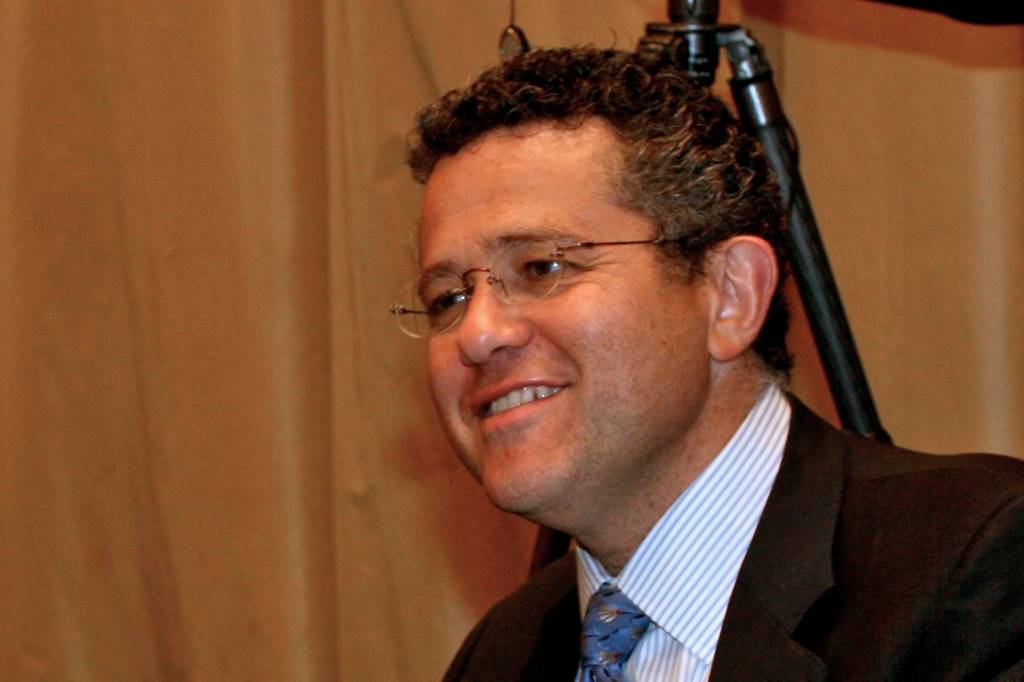
In the era of MeToo and supposed “cancel culture,” it is perhaps shocking that Jeffrey Toobin, the former New Yorker contributor who was fired for masturbating on a Zoom call, has returned to CNN. However, the awkward interview that came up with his return indicates the seriousness of Toobin’s firing and recognizes the inherent preference given to men in the public sphere.
The public has always struggled with the proper response to scandals, particularly involving sex. To this day, people are torn over the infamous scandal between Bill Clinton and Monika Lewinski. Lewinski, fate would have it, is also an example of double standards being used against women. That struggle, however, has yet to be addressed properly, with very few changes being made to ensure that it reaches a just conclusion.
While it is one thing to allow someone to return to their job and acknowledge their mistake, such reparative justice must be applied equally. If not, it ceases to be justice and turns into a privileged for an in-group. In the case of Toobin, it appears that it is the latter over the former.
While Toobin has been allowed to return his job, albeit awkwardly, others are not so lucky. Katie Hill, the former congresswoman from California, is a perfect example of this. She is the first bisexual woman to be elected to Congress, putting further scruples on her. During her time in Congress, she served on the Armed Services Committee and as the Vice-Chair of the Committee on Oversight and Reform. Unfortunately, her career ended abruptly after being accused of sexual impropriety with several staffers and after her nude photos were leaked against her will.
At the time, Hill was in the midst of a quarrelsome divorce with her now ex-husband, whom she accused of leaking the photos. The photos were then published on the right-wing website, RedState, which was quickly accused of publishing revenge porn. Later, it was revealed that the managing editor for RedState, Jennifer Van Laar, had job plans with Hill’s political rivals. Van Laar also falsely claimed that Hill had a Nazi tattoo on her body, further revealing her partisan intentions.
Despite her critics providing no evidence of these relationships being forced, Hill was investigated under new house rules and eventually resigned. If Hill were to run again, it is unlikely that this scandal wouldn’t be used against her.
Hill is far from alone. Reporters such as Emily Wilder have also been subject to undue scrutiny that men in the same industry don’t get. A recent hire to the Associated Press, Wilder was fired 16 days after she was brought onto their staff over tweets she had made before her hiring. Wilder, who is Jewish, worked with the pro-Palestinian organization Jewish Voices for Peace, had made multiple comments about the military operations of the Israeli government. The Stanford Republicans then flagged these posts, and right-wing media came out against her.
Then there is the infamous old example of Bill Clinton and Monika Lewinski. Toobin himself complained about the media’s fixation on sex scandals in his book, but he dumped numerous documents detailing the sex scandal to announce the book. Indeed, no scandal quite captures the privileges that men caught in sex scandals receive, like Clinton’s adultery.
Rather than rehash the story about Clinton, it is critical to remember how Clinton’s reputation has rebounded. Despite her being an intern at the time, Lewinski’s name was subject to endless scorn that Clinton, a married man, was not. Her boss, Linda Tripp, secretly recorded her private admittance of an affair. Tripp then turned the tapes over to Special Counsel Ken Starr, who used it to attack Clinton, forcing her into the public sphere.
Though Clinton was found not guilty, Lewinski’s name was tarnished. There are numerous jokes about Lewinski and t-shirts that make sexual comments at her expense, especially when they insult Hillary Clinton. It seems that misogyny is a self-maintaining parasite.
While there is not much that can be done, it is important to acknowledge what CNN contributes to. They took a man who overtly engaged in sexual misconduct for all of his colleagues to see and gave him his job back. Meanwhile, numerous women in the public eye have been scrutinized to a ridiculous degree, with many of them being targets of victim-blaming and propaganda efforts by their rivals. If there is to be an honest conversation about double standards in public, then there needs to be a recognition that reparative justice is not being applied equally. We live in a country where men get second chances and women don’t.

Several months into Joe Biden’s presidency, there are already signs of stagnation for Biden’s plans. Two members of the Democrat-controlled Senate, Kyrsten Sinema, and Joe Manchin refuse to support critical parts of the party’s legislative strategy. They argue that bipartisanship is the only way forward, making it difficult for the Democratic party to take the initiative against Republican opposition. There is perhaps no stateman more symbolic of this position than Joe Manchin.
Manchin is the Senator for West Virginia and was the 34th Governor of the state. He’s been described by The Atlantic’s Clare Foran as “the most conservative and Trump-friendly Democrat” in the Senate. During his career, Manchin voted with the Trump administration a little over half of the time. In other words, Manchin is a fish out of water.
Recently, Manchin has ensured an almost uniform backlash from within his party after publishing an Op-ed in the Charleston Gazette-Mail. In this now infamous Op-ed, Manchin argues that: “…that partisan voting legislation will destroy the already weakening binds of our democracy…”
Aside from the misrepresentation of the act or the undue faith in Republican-appointed judges’ respect for the Civil Rights Act, Manchin has set himself up for infamy, both in the present and in history. By opposing the For the People’s Act, Manchin has put himself in direct opposition to the Democratic Party and put himself against the people’s will.
What matters now is how that Manchin is facing a simple but all-concerning question: Where does he go from here? Manchin’s path is far from certain. Though he has remained steadfast in his opposition to abolishing the filibuster, his recent decision has set a new tone for his political future.
Some have turned to call him a ‘DINO’ or ‘Democrat in Name Only.’ Others, however, have seen an opportunity to advance their partisan agenda. Once a former advisor and ally to Trump, Steve Bannon has proposed that a ‘major effort’ could convince Manchin to switch parties on his podcast, The War Room. While largely symbolic, the fact that Bannon finds any comfort in Manchin’s politics speaks volumes.
Still, it is unlikely that Manchin will switch parties. Switching partisan allegiances would undermine his reputation and render his word worthless. It is one thing to be a conservative Democrat. It is another to flip from Democrat to Republican just because it is convenient. Joe Manchin is not Strom Thurmond.
He is, however, a man under pressure. Though Manchin has won re-election multiple times throughout his career as a senator, his recent election shows that his grip on power is slipping. In a state that voted for Donald Trump by 69 percent in 2020, Manchin is increasingly facing pressure to get with the political position of his base. West Virginia has been shifting to the right for years, which is sure to pressure Manchin. And that pressure is not going to go away in 2024.
Despite Manchin’s strong opposition to abolishing the filibuster and refusing to vote in favor of the For the People Act, Manchin is not a man in power. His electoral chances in 2024 are slim, considering he barely managed to hold onto his seat in 2019, with only 49.5 percent of the vote. In other words, Manchin has a choice to make.
He could oppose the Democratic position on the filibuster and other proposals even though his prospects for an additional term are faltering, or he could change course. So far, he is still willing to support the John Lewis Voting Rights Act, giving some hope to Democrats and voting rights advocates. But as his support continues to decline in West Virginia, that does not seem likely. What is more likely, and appears to be unfolding as I write, is that Manchin will strive to maintain the bipartisan fantasy he’s sought so firmly at the detriment of his party.
Whatever the case, Manchin’s future will be an interesting thing to watch.

Joe Biden spoke in Tulsa, Oklahoma, on Tuesday, memorializing the infamous Tulsa Race Massacre. The speech came on the 100-year-anniversary of one of the worst acts of racial violence in American history, a symbol of racial injustice. The speech, though largely symbolic, serves as a reminder of the administration’s attempts to bridge the divide and promote a progressive agenda to address inequality. But more than that, it is part of a larger battle over the nature of America in the past and present.
Though not well-known today, the Tulsa Race Massacre of 1921 is perhaps one of the most ruthless examples of political and racial violence examples in American history. It lasted for several days and left 10,000 people homeless. IT also destroyed at least 1,400 homes and businesses. Before the massacre, the primarily Black neighborhood of Greenwood was one of the few areas in the country where Black Americans could flourish during the rise of the Klu Klux Klan. It was so successful that it was known as ‘Black Wall Street’ by many who observed it. W.E. B Dubois described pre-massacre Tulsa as “a happy new city.” But that happiness would not last.
In late May, Dick Rowland, a young Black shoeshiner, was arrested for allegedly raping a young White girl by the name of Sarah Page while in an elevator with her. Page reportedly shrieked, and Rowland fled the scene before being arrested. Local newspapers portrayed the confusing turn of events as a rapacious Black man assaulting an innocent White woman. Years later, Page wrote a letter exonerating Rowland, but at the time, that did not matter to the White denizens of Tulsa.
Marching to the building where Rowland was held, a crowd of White Tulsans clashed in the streets with a group of Black veterans who intended to defend Rowland from any potential lynchings. Outnumbered, the crowd of Black veterans became targets for the mob. Describing the violence in detail, the city’s 2001 commission explained that:
“As the whites moved north, they set fire to practically every building in the African American community, including a dozen churches, five hotels, thirty-one restaurants, four drug stores, eight doctor’s offices, more than two dozen grocery stores, and the Black public library…”
Excerpts from that report also confirmed that, despite the White populace’s denial, some planes did drop explosives on the city to destroy Greenwood, although not military grade. Tulsa burned for several days, and entire communities were lost after decades of hard work and determination being invested in building something beautiful.

By the end of the massacre, official counts stated that twenty-six Black Americans and ten White Americans were killed. However, experts now suspect that at least three hundred people were killed. What followed was a series of lies and obfuscation that either downplayed or outright denied the racist violence. Local and national newspapers emphasized the White death toll while ignoring the deaths of Black residents. Others attempted to equivocate between the levels of violence, treating it like a war rather than the mass murder it was.

While Black residents used photographs to remember the crime, others took the legacy completely differently. White rioters began promoting their violence with postcards stamped with images of the burning buildings and the murders they carried out. Whereas these postcards attempted to promote the violence, they now serve as a painful reminder of the attitudes of those who came before us.

Former residents of Black Wall Street were then subject to even further abuse, with many insurance companies refusing to provide coverage for the destroyed homes and businesses. To this day, these same companies refuse to pay the descendants of the victims one hundred years later.
While it is tempting for some to dismiss the centennial anniversary of this racist massacre, it is important to consider the context in which we remember it. The United States has a long history of either downplaying or outright dismissing the severity of racism in the past and present. Tulsa is no exception to that trend. However, what is unique about Tulsa is its severity and how little people know about it.
Before the 1990s, very few Americans cared to learn about Tulsa, and many textbooks omitted it entirely from their curriculum. The event was covered so little that it took HBO’s Watchmen to draw attention to the 1921 mass murder. Before that point, Tulsa did not exist in the minds of many Americans. Indeed, the show’s creators only heard about it thanks to an essay in The Atlantic by Ta-Nehisi Coates, the creator of Black Panther and a prolific Marvel comic book writer.
Then there are the bodies. Despite attempts to determine the full death count at Tulsa, efforts have been complicated by the increasingly declining number of witnesses. Some of the survivors who testified about Tulsa noted that there were areas where Black victims were dumped, suggesting that Tulsa has at least one mass grave. One was found in Oaklawn Cemetery in October of last year, with eleven caskets being unearthed. To this day, it is unclear how many bodies remain buried without the knowledge of their families.
Into this painful memory marches President Joe Biden, whose election depended upon Black votes. From the primary to the general election, Black voters carried Biden to victory, and it shows. In his speech, the 46th president made sure to recognize and embrace the painful history that had long been ignored, saying: “My fellow Americans, this was not a riot…This was a massacre.” The recognition is sure to go a long way for many, especially those survivors who remain. But more than that, Biden’s speech speaks to a larger desire that continues to grow in the public to recognize and address much of the damage that still permeates through the Black community. Indeed, though not fully in favor of reparations, the Biden administration has announced new efforts to help minority communities. On Monday, the administration announced that it would allocate federal funds to minority businesses. Missing, however, is a plan to cancel student loan debt, which disproportionately affects Black Americans, prompting NAACP president, Derrick Johnson, to criticize the administration, saying:
“Student loan debt continues to suppress the economic prosperity of Black Americans across the nation…You cannot begin to address the racial wealth gap without addressing the student loan debt crisis.”
Still, the symbolism of the event is far from insignificant. President Biden visited and walked with several of the survivors to hear their stories. He is also the only American president to come to the city with the intent of recognizing that dark chapter in the city’s history.
Despite attempts to examine the darker chapters in American history, there are dissenting voices across the country, with multiple state legislatures attempting to restrict curriculum that talks about America’s racist history. Republicans across the country have locked onto what they see as the left’s indoctrination of children in public schools through Critical Race Theory, and it hits right at home in Tulsa.
Though promising to investigate the full history of the infamous massacre, Oklahoma’s governor, Kevin Stitt, has been a part of this effort. Last week, Stitt signed a bill into law that would prevent public schools from teaching about the long-term harms of racism in America, arguing that it portrays White Americans as inherently racist. In response, the Tulsa Race Massacre Centennial Commission cut ties with the governor, criticizing his decision to sign the bill. The conflict between the governor and the commission has also been exacerbated by the fact that Gov. Stitt didn’t attend a single commission meeting, although he alleges that the commission never informed him of the meeting time.
The battle over the school curriculum has reached the highest levels of government. In late April, Senator Mitch McConnell argued that programs such as the 1619 Project, which examines racism’s history in the United States, are divisive, showing that Republicans are increasingly hostile to attempts to address underrepresented elements of American history.
While Democrats are split along moderate and progressive lines, it is almost certain that they will continue to support these initiatives. In this context, it becomes that The Tulsa Race Massacre is likely to be a central piece of the battle for America’s legacy. How that will play out remains to be seen, but one thing is for certain: It is not going away.

History is a finicky thing. Research methods are constantly evolving, and ways of studying that were once considered golden today are revealed to be flawed tomorrow. Previous understandings of the past sometimes fall apart or are revised upon finding new evidence. In many cases, researchers go in thinking one thing about a given subject only to come out of their project thinking something completely different. However, that process depends largely on the independence of the researcher and their ability to analyze the sources they’re using critically. However, recently, that independence has been under attack by members of the U.S government with one project in mind: The 1619 Project.
If a person ever wanted to measure the reaction to the 1619 Project and the essays it produced, one need only look at the public statements released by the Republican party’s most bombastic members. In July of 2020, Sen. Tom Cotton of Arkansas introduced a bill that would’ve prohibited providing federal funds to schools that used the 1619 project as curriculum material if it had been passed. The move by Cotton was prompted by his aversion to what he saw as a “racially divisive” work that served to “indoctrinate young Americans…”1 Similarly, former President Donald Trump denounced the project in a now-infamous speech before the National Archives.2 And just last week, the Senate Minority Leader Mitch McConnell released a letter that called upon the Secretary of Education, Dr. Miguel Cardona, to pull the essays from an educational program by the Department of Education.3 Not bothering to stop with just denouncing the project, some went further.
These efforts were later followed up by the 1776 Commission, which was, in turn, lampooned by historians.4 Professional historians so detested it that the American Historical Association, one of the most well-respected historical organizations in the country, released a statement condemning the report, something it did not do for the 1619 Project. 5 All of this culminated in an intense political and social war that, at its core, was a fight over what America was and is today. But in that fight, much of the nuances behind the project were lost. So that begs the question: what exactly is the 1619 Project?
The 1619 Project is the brainchild of Pulitzer prize-winning journalist, commentator, and Chair of the UNC-Chapel Hill School of Journalism, Nikole Hannah-Jones.6 It’s stated goal was “…to re-frame American history by considering what it would mean to regard 1619 as our nation’s birth year.” 7 The significance of that date is revealing for several reasons, but the main one is that 1619 is the first year that African people arrived in a mainland English colony, all of whom were in chains.8 This was part of the reason that the New York Times’ project sparked so much interest, as it was released on the 400th anniversary of that infamous date of arrival.
The project was more than just a revision of previous understandings of slavery and the struggle for liberation by Black Americans, however. Much of the project was directed at understanding modern phenomena through the lens of previous acts of racial malfeasance. One article by Princeton Historian and author Kevin M. Kruse convincingly argues that Atlanta’s failure to address traffic results from White Flight tendencies that stretch back decades.9 I am particularly fond of Jamelle Bouie’s piece, which ties John C. Calhoun’s nullification theories with the obstructionist tendencies of modern American conservatism.10 But there was one essay that stood out above all the rest. The one that the project’s own creator wrote.
At the beginning of the 1619 Project’s publication, an introductory essay was put front and center titled America Wasn’t A Democracy Until Black American Made It One. The core thesis is that America’s ideals were publicly stated by its founders but were made a reality by the long-term and consistently painful efforts of Black activists who demanded equality for themselves and others. Hannah-Jones begins her essay with a powerful and deeply emotional story about how her father, Milton Hannah, a veteran and the son of sharecroppers in Greenwood, Mississippi, endured the repression of the Jim Crow South.11
This is significant not just for Hannah-Jones, but also for America itself as Greenwood was the site where Emmett Till’s body was found, and his killers, J W. Millam and Roy Bryant, were held.12 It was the site where White Citizens’ Council member, Charles E. Sampson, was the Mayor, using his power to crack down on Civil Rights activists with police dogs, arresting famed SNCC activists Bob Moses and James Forman.13 In other words, this essay was always going to be personal and passionate.
From the beginning of her essay, Hannah-Jones holds little back, describing the violence her family faced in blunt terms.
White residents in Mississippi lynched more black people than those in any other state in the country, and the white people in my dad’s home county lynched more black residents than those in any other county in Mississippi, often for such “crimes” as entering a room occupied by white women, bumping into a white girl or trying to start a sharecroppers union. My dad’s mother, like all the black people in Greenwood, could not vote, use the public library or find work other than toiling in the cotton fields or toiling in white people’s houses. 14
Her grandmother, determined to leave the intense segregation of the South, fled to Waterloo, Iowa. Unfortunately, she would find that segregation did not end in Iowa either. The indignities that came with such repression inevitably affected her family, and at the age of 17, Hannah-Jones’ father joined the military. Previous generations of African-American soldiers joined and returned with a spirit of defiance, particularly in World War 2, using their exposure to the more egalitarian nations of Europe to demand change.15
Hannah, however, joined in the hopes that his military career would secure the respect of his country and help him escape poverty. However, that did not happen even with the military’s desegregation over a decade earlier.16 Once again, Hannah was forced to endure the racialized caste system he joined to escape.
Despite this perpetual malfeasance, Hannah retained a sense of patriotism, flying an American flag. Something that initially baffled his daughter.
So when I was young, that flag outside our home never made sense to me. How could this black man, having seen firsthand the way his country abused black Americans, how it refused to treat us as full citizens, proudly fly its banner? I didn’t understand his patriotism. It deeply embarrassed me.
However, such a position did not last, as Hannah-Jones would soon understand that her father retained his sense of being a part of America by virtue of his contributions to it, even if the country itself refused to admit they existed. Indeed, the rest of her essay hits on that note. To Hannah-Jones, the idea that African-American contributions to our democracy have been ignored is the whole point. Her father waved his flag not to celebrate what America did to him but in defiance against those who would insist that he was not an American and those who refused to recognize his sacrifice.
Describing this revelation, Hannah-Jones notes that:
Black Americans have also been, and continue to be, foundational to the idea of American freedom. More than any other group in this country’s history, we have served, generation after generation, in an overlooked but vital role: It is we who have been the perfecters of this democracy.
This, at its core, is what the essay is about. To fight for equality and to fight for liberty is the most American thing that anyone can do. Black Americans have been doing it from the nation’s inception should be remembered and taught more, something the project seeks to do.
Of course, there are aspects of anger to this work, as one would expect with such a painful issue as racism. Hannah-Jones is quick to remind America that one of its favorite sons, Thomas Jefferson wrote the Declaration of Independence while in the company of his family’s slave, Robert Hemmings.17 She rightfully points out that the Trans-Atlantic Slave Trade, of which American was a participant, was a particularly cruel form of subjugation due to its generational and racial elements. She strongly demonstrates the severity of the struggle for equality by critiquing traditional views of history. 18
Needless to say, this essay provoked immense controversy despite its triumphant narrative for Black Americans. In particular, the portrayal of the Civil War was concerning to several scholars, with some of them objecting to the representation of Lincoln as hesitant to end slavery and that some of the quotes attributed to Lincoln lack context.
…we are presented with an image of Abraham Lincoln in 1862, informing a delegation of “five esteemed free black men” at the White House that, because black Americans were a “troublesome presence,” his solution was colonization — “to ship black people, once freed, to another country.” No mention, however, is made that the “troublesome presence” comment is Lincoln’s description in 1852 of the views of Henry Clay, or that colonization would be “sloughed off” by him (in John Hay’s diary) as a “barbarous humbug,” or that Lincoln would eventually be murdered by a white supremacist in 1865 after calling for black voting rights, or that this was the man whom Frederick Douglass described as “emphatically the black man’s president.”19
These criticism were not without their supporters, nor were they without merit. Several of the mistakes mentioned in this letter remain unfixed by the Times’ editorial team. Had the editorial team made some revisions, it would’ve demonstrated transparency to the public. However, the mistakes in that particular essay do not end with poor and unnuanced representations of Lincoln.
As it was presented, the American Revolution is yet another error on the part of the Times’ project. In her essay, Hannah-Jones inaccurately claims that the American Revolution resulted from colonists’ desire to protect the institution of slavery. This argument is largely based on a case in Britain called the Somerset Case of 1772, which invalidated laws in Britain for sending escaped slaves back to their masters.20 There is also the Dunmore Proclamation, which promised enslaved people their permanent freedom if they fought for the crown. However, representing the English crown as a symbol of abolitionism ignores the fact that slavery had only been criminal in England proper by 1772 and remained legal across the empire until 1833.21
This inevitably exposed the project to misguided attempts to undermine its legitimacy, with the Heritage Foundation releasing a video to denounce the project by reasserting the same tired tropes that the Project sought to challenge in the first place.
To her credit, Hannah-Jones acknowledged the error and even expanded upon her thoughts with some revisions made on the claims of the American revolution. But the damage has been done.
So, where does that leave the 1619 Project? Was it just some failed revisionist attempt to misrepresent history? Should it be abandoned? In my humble opinion, the answer to both those questions is an unequivocal no. The 1619 Project was an honest, albeit flawed attempt to pull back the curtain on many of the orthodox misrepresentations of American history that have fed Americans a rosy picture that does not reflect reality. The 1619 Project’s errors aside, it was a step in the right direction. It was and still is a sorely needed addition to the public’s understanding of history. Whereas others may wish to end the project, I propose the opposite. The project should continue, but it should take care to avoid similar mistakes in the future. As Professor Leslie Harris of Northwestern University put it:
…the 1619 Project is a much-needed corrective to the blindly celebratory histories that once dominated our understanding of the past—histories that wrongly suggested racism and slavery were not a central part of U.S. history.22
If America is to ever grow beyond its past sins, it must first look inward and face them, and Hannah-Jones’ project is a critical part of that enterprise.
Anagha Srikanth, “Sen. Tom Cotton Introduces Bill Withholding Federal Funding for Schools Teaching the 1619 Project,” The Hill, July 23, 2020, accessed May 5, 2021, https://thehill.com/changing-america/enrichment/education/508820-sen-tom-cotton-introduces-bill-withholding-federal.
Fabiola Cineas, “Critical Race Theory, and Trump’s War on It, Explained,” Vox, September 24, 2020, accessed May 5, 2021, https://www.vox.com/2020/9/24/21451220/critical-race-theory-diversity-training-trump.
Mitch McConnell et al., “Mitch McConnell to Miguel Cardona,” April 29, 2021, accessed 5 May, 2021, https://www.republicanleader.senate.gov/imo/media/doc/FINAL%20DOE%20Civics%20Education%20Signed%204.29.21.pdf.
Nicole Guadiano, “Trump Creates 1776 Commission to Promote ‘Patriotic Education,’” POLITICO, n.d., accessed May 5, 2021, https://www.politico.com/news/2020/11/02/trump-1776-commission-education-433885.
“AHA Condemns Report of Advisory 1776 Commission,” January 20, 2021, accessed May 5, 2021, https://www.historians.org/news-and-advocacy/aha-advocacy/aha-statement-condemning-report-of-advisory-1776-commission-(january-2021).
DeMicia Inman, “1619 Project Creator Nikole Hannah-Jones Joins UNC Faculty,” The Grio, April 28, 2021, accessed May 5, 2021, https://news.yahoo.com/1619-project-creator-nikole-hannah-232700270.html.
Jake Silverstein, “Why We Published The 1619 Project,” The New York Times accessed May 5, 2021, https://www.nytimes.com/interactive/2019/12/20/magazine/1619-intro.html.
Rebecca Ruiz, “1619 Is a Pivotal Date in American History for Two Reasons,” Mashable, n.d., accessed May 5, 2021, https://mashable.com/article/1619-why-does-it-matter/.
Kevin M. Kruse, “How Segregation Caused Your Traffic Jam,” The New York Times, August 14, 2019, accessed May 5, 2021, https://www.nytimes.com/interactive/2019/08/14/magazine/traffic-atlanta-segregation.html,
Jamelle Bouie, “What the Reactionary Politics of 2019 Owe to the Politics of Slavery,” The New York Times, August 14, 2019, accessed May 6, 2021, https://www.nytimes.com/interactive/2019/08/14/magazine/republicans-racism-african-americans.html,
Nikole Hannah-Jones, “America Wasn’t a Democracy, Until Black Americans Made It One,” The New York Times, August 14, 2019, accessed May 5, 2021, https://www.nytimes.com/interactive/2019/08/14/magazine/black-history-american-democracy.html,
“The Murder of Emmett Till,” PBS, accessed May 6, 2021, https://www.pbs.org/wgbh/americanexperience/features/till-timeline/.
Claude Sitton, “8 Negroes Jailed in Mississippi; Sentenced to 4 Months and $200 Fines in Greenwood Police Dogs Held Ready ‘Foreign Agitators’ Scored Intercession Hoped For,” The New York Times, March 30, 1963, accessed May 6, 2021, http://timesmachine.nytimes.com/timesmachine/1963/03/30/89525594.html.
Nikole Hannah-Jones, “America Wasn’t a Democracy, Until Black Americans Made It One,” The New York Times, August 14, 2019, accessed May 5, 2021, https://www.nytimes.com/interactive/2019/08/14/magazine/black-history-american-democracy.html,
`Leon F. Litwack, “‘Fight the Power!’ The Legacy of the Civil Rights Movement,” The Journal of Southern History 75, no. 1 (2009): 3–28. https://doi.org/10.2307/27650400.
Lisa Vox, “How Executive Order 9981 Desegregated the U.S. Military,” ThoughtCo, October 18, 2019, accessed May 6, 2021, https://www.thoughtco.com/executive-order-9981-us-military-desegregation-45360.
Hillel Italie, “Remembering the Slave Who Joined Jefferson in Philadelphia,” AP News, July 1, 2020, accessed May 6, 2021, https://apnews.com/article/0becfa1aeb292467fd837cb1c5714c8c.
Nikole Hannah-Jones, “America Wasn’t a Democracy, Until Black Americans Made It One,” The New York Times, August 14, 2019, accessed May 5, 2021, https://www.nytimes.com/interactive/2019/08/14/magazine/black-history-american-democracy.html,
William Allen et al., “Twelve Scholars Critique the 1619 Project and the New York Times Magazine Editor Responds | History News Network,” History News Network, last modified December 30, 2019, accessed May 5, 2021, https://historynewsnetwork.org/article/174140.
“Somersett Case | Great Britain [1772],” Encyclopedia Britannica, accessed May 6, 2021, https://www.britannica.com/topic/Somersett-case.
Natasha Henry, “Slavery Abolition Act | History & Impact,” Encyclopedia Britannica, accessed May 6, 2021, https://www.britannica.com/topic/Slavery-Abolition-Act.
Leslie Harris, “Opinion | I Helped Fact-Check the 1619 Project. The Times Ignored Me.,” POLITICO, March 6, 2020, accessed May 5, 2021, https://www.politico.com/news/magazine/2020/03/06/1619-project-new-york-times-mistake-122248.

