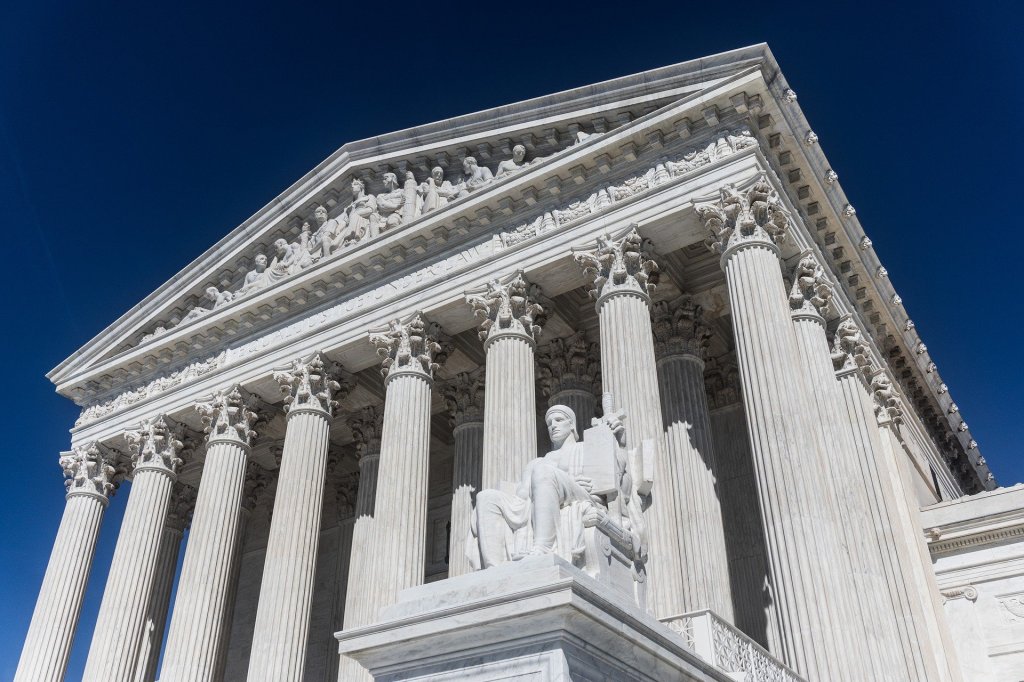
There is a part of me that is reticent to write this. No doubt some will see my writing this article as an act of arrogance, but it is no less pertinent or necessary to the public good to say this. For all the long-term good he has done in serving the American people, Justice Breyer must resign from the Supreme Court. Suppose there is to be any credibility left in this mighty institution of American jurisprudence. In that case, a long-term buffer must remain on the bench to prevent the continued degradation of our political institutions.
From the beginning of this Court’s conception, the appointments and approach to rulings have been nothing short of political. Despite Obama being the duly elected President of the United States, then-Majority leader Mitch McConnell blocked Judge Merrick Garland from a vote in the Senate, effectively meaning that the President would not affect the composition of the Court’s composition. Instead, McConnell elected to give that power to Donald Trump, a president who enjoyed none of the popular mandate that his predecessor possessed.
This move further irritated the tensions between the American people, who voted for Obama and his platform, and the administration that actively altered the face of the Court by appointing Neil Gorsuch.
What followed was two judges with controversies all on their own. Then-Judge Kavanaugh was accused of sexual assault, and Republicans almost immediately pushed the accusation aside with calculated precision. The consequences were immense for Dr. Ford, the main accuser, as she was subjected to death threats after Kavanaugh’s testimony. Republicans appointed him anyway. Then came Judge Amy Coney Barret, who was controversial for various reasons. Namely, her opposition to Roe V. Wade (1973). But more than that, Barret revealed a fundamental ignorance of the laws she was supposed to uphold. During her hearing, Barret was asked by Senator Ben Sasse (R-Nebraska) about the five rights protected under the 1st Amendment. Barrett seemingly forgot that the right to protest, also known as the right to have a redress of grievances, is a protected right.
Amy Coney Barrett doesn’t know the five freedoms guaranteed in First Amendment.pic.twitter.com/w8XfKOvMVy
This embarrassing display is not the only basis for concern, though significant. One would expect a lifetime appointee to the Court would know about one of the most important rights a democracy can have: the right to dissent. However, it is unsurprising that such a slip didn’t hurt her appointment chances. All the GOP is after is another conservative justice.
Barrett, Gorsuch, and Kavanaugh represent an unmitigated control level over the country’s highest court. During his time on the Court, former Justice William J. Brennan Jr. liked to remind his colleagues that a person could do anything with five votes. While hyperbolic, it speaks volumes about a single appointee’s power, much less three. With a five-to-four majority, some moderation is possible and even required to get a ruling. But with a six-to-three majority, that moderation is unnecessary so long as those three additional justices are on the same page.
And that is where Justice Breyer comes in.
Under normal circumstances, Justice Breyer would be under no pressure to resign, as Justices usually serve for life. But with the current state of the Court falling to unqualified and partisan judges on the Court, the fate and legitimacy of the judiciary are at stake.
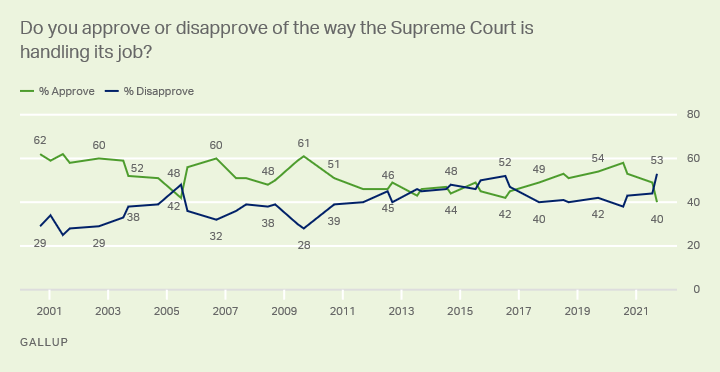
As time moves on, these justices rule further and further to the right, far away from the country’s will. And such a position creates strain on public trust. Already, the Court has seen its popular support decline significantly to 40 percent approving compared to 54 percent last year. It was the lowest approval rating the Supreme Court has received since Gallup began recording.
Image taken from Gallup, 2021.
If Justice Breyer is replaced by another conservative justice, this trend of right-wing rulings and public disapproval will further delegitimize America’s highest court. As such, replacing Breyer with a long-term check to the right is necessary.
Now that Biden has won his election and has control of both the House and the Senate, it is the perfect time to replace Breyer to prevent a further shift in the Court, and we might not get another chance to prevent the Court’s shift rightward.
If we are to avoid the mistakes that came with the late Ginsburg’s seat, we must take the initiative and prevent the GOP from further destroying the Court’s value.
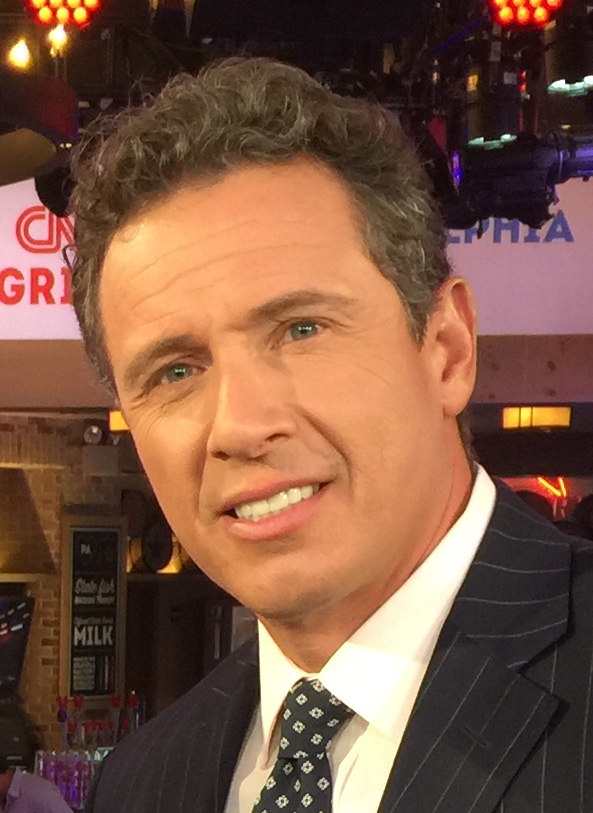
Chris Cuomo, CNN’s host of Cuomo Prime Time, was suspended on Wednesday after new documents revealed that he was more involved in his brother’s attempts to silence his accusers than previously thought. The revelations came from the office of New York Attorney General Letitia James and opened a new chapter in the fight over CNN’s integrity. Thanks to these documents, it is now clear that Cuomo used his connections as a journalist to monitor his brother’s accusers and keep tabs on the stories other reporters wrote about him. While horrifying in its implications for journalistic ethics, this revelation also requires us to ask a simple but important question. What took so long?
From the very beginning, Cuomo’s involvement with his brother was a matter of public scrutiny. Even without the allegations against the former governor, a journalist interviewing his brother on air was far from accepted among other reporters. Though Cuomo attempted to defend the interview by arguing that the story in question didn’t involve his brother as a matter of personal accountability, others have rightly pointed out that the story involved state agencies that the former governor had control over. At the very least, the willingness that Cuomo showed to blur the lines between personal interest and journalistic duty should have been a red flag for CNN’s leadership.
Instead, CNN and its leaders failed to remove Cuomo and apologize for the obvious error temporarily. That is, of course, until the allegations came out.
After allegations against former governor Andrew Cuomo came out, the now controversial anchor explained that he “obviously” couldn’t report on the happenings of his brother due to the conflict of interests therein. However, that had not stopped him previously. Instead, he refrained from discussing the issue altogether, seemingly finding his journalistic integrity when the moment required it. It seemed as though the New York anchor had finally realized that his previous behavior was not going to fly and try to make up for it with decent coverage. If only that were true.
Instead, a guest essay by Cuomo’s former boss at ABC, Shelley Ross, alleged sexual misconduct against the anchor and that he had grabbed her rear without her consent. Cuomo was seemingly so enthusiastic about it that he allegedly told his former boss, “I can do this now that you’re no longer my boss.” Ross backed up her claim with an email from Cuomo in which he apologized for his conduct seemingly not because it was inappropriate but because her husband was there.
Previous readers of my newsletter will know my thoughts on this, as it was not long after these reports came out that I demanded that CNN fire Cuomo for his conduct, as he was also revealed to be helping his brother defend himself from allegations of sexual harassment. Of course, I did not expect a major news organization to listen, but the fact that it took yet another example of his unethical conduct to get even a suspension is beyond ridiculous.
The moment Cuomo was accused of sexual misconduct with documented proof should have been the moment he was removed from his position. It should not require the Attorney General of a state to get a news organization to admit that keeping the man giving his brother’s advisor intel on his accusers might not be the best decision.
It is especially damning that he was using his connections, which he no doubt got from CNN and other news organizations, to monitor journalist Ronan Farrow at the New Yorker, as it reveals how little Cuomo cared for the most basic standards of objective reporting. While absolute, perfect reporting is almost impossible, that does not prevent a reporter from taking basic steps to avoid a conflict of interest. Or, at the very least, avoid getting involved with the scandal itself.
In perhaps an even more pathetic display of his arrogance, Cuomo immediately went on his podcast to describe how much it “hurt” and how “embarrassing” it was for him to be suspended from his show. He then pointed out his previous apologies and the like, seemingly hoping it would be enough, but it’s not. Once a person crosses the line into nepotistic coverage and actively works to silence victims of sexual harassment, there can be no going back.
Chris Cuomo should have been fired long ago, and I hope that media outlets will be responsible enough to keep him off the air and avoid giving this corrupt con-man anymore credibility to tarnish. That is, of course, if CNN follows through.
With its continuous and unending coverage in the news, it is hard to find an example of one person who has not heard about Critical Race Theory. And of course, with such a large amount of coverage, everyone seems to have an opinion on it. With those opinions under their belt, people begin to make claims that are either false, misleading, or, in some cases, outright lies. Those lies inevitably spread around the internet and influence other people to the point where they convince their leaders to act upon those lies. With the rise in laws banning CRT, it becomes increasingly obvious that these lies have spread far beyond their acceptable range, are self-destructive to the public, and serve only to whitewash history in the education system. It is high time that those who help spread those lies are held accountable for their dishonesty.
WHAT IS CRITICAL RACE THEORY?
Critical Race Theory is a multi-faceted and complex academic approach to law and racism in the United States. It came from a previous theory of legal analysis known as Critical Legal Studies, which argued that the law is never truly neutral and represents the interests of those who write the law. A decade later, the theory grew into Critical Race Theory.
CRT began in the 1980s, thanks to Harvard Professor Derrick Bell. With his articleBrown v. Board of Education and the Interest-Convergence Dilemma (1980), Bell argued that the law’s divergent position with the integration goals could be more properly dealt with by focusing on improvements in education. The argument underlying this paper and many like it is that the law, its current form, maintains white supremacy by failing to adequately deal with disparities created by previous forms of oppression. Its self-proclaimed race neutrality does not, in the eyes of Critical Race Theory, prevent it from failing to address disparities in treatment and outcomes.
Since then, essays such as Whiteness As Property(2006) and Race, Reform and Retrenchment (1988) also explained this perspective related to racial identity and colorblindness respectively. As Professor Kimberle Crenshaw explains, Critical Race Theory “is a way of looking at law’s role platforming, facilitating, producing, and even insulating racial inequality in our country, ranging from health to wealth to segregation to policing.”
It is intended to observe systemic racism through a systemic and critical lens. It spans beyond personal prejudice, despite what some claim about how it views white prejudice. It is, at most, a standpoint theory that is meant to explain system racism.
But you wouldn’t know that by listening to its recent detractors.
BRING IN THE PROPAGANDISTS
The fight over Critical Race Theory has been a political game for Republican operatives from the very beginning. Activists like Christopher Rufo have worked tirelessly to amplify the idea that Critical Race Theory, a standpoint theory from the 1990s, is being spread rapidly through the workforce and schools. To support this claim, Rufo took leaked documents from multiple poorly-worded training seminars on anti-racism and released them to the public to create as much conflict and distrust as humanly possible.
Rufo did not merely leak information, however. Instead, he strived to reframe the information he was releasing so his audience would see it from his point of view. To do that, he needed a good way to describe his new enemy. To Rufo, CRT was more than just an academic theory that explained structural inequality. It was the enemy in the long-standing culture war dating back to the Obama administration. And he needed a way to describe that enemy while encompassing as much as he could within that label. Describing this need, Rufo explained his approach to the New Yorker, saying:
We’ve needed new language for these issues…Political correctness’ is a dated term and, more importantly, doesn’t apply anymore. It’s not that elites are enforcing a set of manners and cultural limits, they’re seeking to reengineer the foundation of human psychology and social institutions through the new politics of race, It’s much more invasive than mere ‘correctness,’ which is a mechanism of social control, but not the heart of what’s happening. The other frames are wrong, too: ‘cancel culture’ is a vacuous term and doesn’t translate into a political program; ‘woke’ is a good epithet, but it’s too broad, too terminal, too easily brushed aside. ‘Critical race theory’ is the perfect villain.”
And wouldn’t you know it? Rufo’s attempts to draw the attention of Fox News host Tucker Carlson, who had Rufo on his show, Tucker Carlson Tonight, to discuss this newly established concern. During his short time on Carlson’s show, Rufo argued that CRT represented an existential threat to American politics and civil life and that the Trump administration should intervene to prevent its spread.
The end result was predictable as it was reprehensible. Within two days of Rufo’s comments, the Trump administration began its assault on anti-racist training. The Director of the Office of Management and Budget, Russel Vought, releasedan order requiring all agencies to end anti-racist training. In his letter, Vought labeled said training as “un-American propaganda training sessions.”
The order further urged that agencies should root out any examples of CRT in their training, saying: ” in the meantime, all agencies are directed to begin to identify all contracts or other agency spending related to any training on “critical race theory, white privilege, or any other training or propaganda effort that teaches or suggests either (1) that the United States is an inherently racist or evil country or (2) that any race or ethnicity is inherently racist or evil…”
This use of state power and the ability to influence government agencies to remove what is deemed harmful ideas is precisely the point. There is no attempt to adequately represent Critical Race Theory or explain its historical context. Instead, anti-CRT advocates are working to restrict the development of ideas that don’t fit a conservative mold. And considering the state of the current Republican party, it is not too surprising that this has devolved into a moral panic.
That is, after all, what Rufo wants.
Earlier this year, Rufo explained his intentions in detail, tweeting out what should have been the death of his credibility.
We have successfully frozen their brand—"critical race theory"—into the public conversation and are steadily driving up negative perceptions. We will eventually turn it toxic, as we put all of the various cultural insanities under that brand category.
— Christopher F. Rufo ⚔️ (@realchrisrufo) March 15, 2021
Rufo saying the quiet part out loud.
Rufo’s ultimate goal in opposing CRT is to turn it into a nebulous evil that can be used to label anything Republicans don’t approve of.
The goal is to have the public read something crazy in the newspaper and immediately think "critical race theory." We have decodified the term and will recodify it to annex the entire range of cultural constructions that are unpopular with Americans.
— Christopher F. Rufo ⚔️ (@realchrisrufo) March 15, 2021
The purpose of this moral panic is to ensure that no matter what the intention or utility of an idea if Republicans don’t like it, they can put into a box of Critical Race Theory and discard it. More importantly, they can ban it. It is not surprising, considering that Rufo is a senior fellow of the Manhattan Institute, a right-wing think tank despite his attempts to appeal to everyday Americans.
This political connection is necessary to understand the fight over this abstract legal theory. It can’t be abstracted away to some sort of illiberal theory that threatens free speech, as Tara Ella, has done. Nor can it be simply misconstrued as “supplantation of liberalism by the radical critical theory worldview.” Instead, it is important to consider the consequences of poorly-written bans on what amounts to a niche academic theory.
In Tennessee, the legislature banned Critical Race Theory from being taught in schools, prohibiting any material that causes discomfort or asserts privilege based on race. Other prohibited positions include any material that asserts meritocracy is racist or contributes to racism in America and that the state of America is racist.
The poorly defined nature of these laws was on full display just this week as the Williamson County chapter of Moms For Liberty (MFL) filed a complaint with the state, attempting to remove two books, one discussing Martin Luther King Jr.’s march on Washington and an autobiography written about Ruby Bridges, who was the first black child to integrate into a New Orleans school.
The argument by MFL is that these two books depict examples of aggression by police and wrongly vilify Bull Connor, the infamous commissioner of public safety and segregationist in Birmingham, Alabama.
Despite all of these complaints targeting examples of historical fact, organizations like MFL will insist that they are defending their kids from the pain that comes with seeing such dark images and gritty history. For all intents and purposes, organizations like them are trying to tone down teaching on racism despite the clear importance of our nation’s racist past. So long as the panic over Critical Race Theory continues, attempts to disregard basic historical facts will remain a part of American life. Such an outcome is unacceptable.
After its explosive arrival on the political stage, the 1619 Project is set to return. This time in book form, as Pulitzer Journalists Nikole Hannah-Jones and her colleagues have expanded on their famous work. One can only hope that it improves upon a much-needed criticism of the traditional American narrative.
The project, which began in 2019, challenged traditional views of American history. In most cases, that challenge was justified, and where it made mistakes, corrections were made. I happily pointed out mistakes, but with the project rising onto the national stage, very few critics were concerned with its actual meaning or arguments.
Here Comes The Backlash
It isn’t too surprising that the 1619 Project provoked a backlash. Indeed, any narrative which seeks to challenge the orthodox perspective will create controversy. And the 1619 project was certainly bold in its challenge. In its introduction, The New York Times explained the purpose of the project, saying:
The 1619 Project is an ongoing initiative from The New York Times Magazine that began in August 2019, the 400th anniversary of the beginning of American slavery. It aims to reframe the country’s history by placing the consequences of slavery and the contributions of black Americans at the very center of our national narrative.
1619 Project, New York Times, 2019.
This perspective necessarily ran into the usual responses that come with critiquing the triumphant narrative that many Americans have been sold. One example, one I have examined before, is the Heritage Foundation’s video on the subject.
As I explained then, the very arguments that the 1619 Project works to address are repeated without so much as a substantial critique of the actual facts undergirding their response. Indeed, it was a vapid and flaccid response to what could’ve been a lively and honest debate about this legacy and its future. And it would continue like that, especially among Republicans. But I have already addressed much of that backlash. What’s important to note is that flawed as it was, the 1619 Project’s detractors are not particularly interested in its historiographical implications. Far from it.
Senator Tom Cotton (R-Arkansas) proposed a law to prohibit the federal government from giving funds to schools that used the project in its curriculum and called it a “racially divisive, revisionist account of history that denies the noble principles of freedom and equality on which our nation was founded.” This approach, in turn, created a liberal backlash of its own, creating a political schism over the project. Though the project is not obligated to limit its work to appease this backlash. One can only hope that as the new project comes out, it will avoid these dishonest tactics and get to the root of America’s history with racism.
What’s Next?AND WHY THE BACKLASH MATTERS
We can expect to see the project expand upon its analysis and address some of its criticism if all goes well. While the 1619 project has done its best to address key issues, it has not fully addressed its critics directly. Nikole Hannah-Jones’ essay, America Wasn’t a Democracy Until African Americans Made It One (2019), was one provocative piece that tried to give a more human perspective than other works in the project but did not get ahead of its critics. Though that is not too surprising, considering the personal nature of the essay. Like any work of historiographical value, it should, in theory, address its critics and work to address their views and, refute them as firmly as possible.
By firm, I mean that the project should endeavor to address the exact arguments against the project’s core mission. Rather than making an edit after the fact, it should focus on its critics and its, both political and historical. Whether or not the 1619 project’s creators wanted it, they are the centerpiece of ongoing controversy about who we are as Americans and who we are as a nation. Though, considering her statements in response to her critics, I feel that this project will be worth the wait.
“People who send threats, people who make threats, what they’re really trying to do is silence you… This is my mission. And so nothing will distract me from that, and I just can’t go around worried about what might happen. I just have to do my job.”
Congress took a historic step towards accountability, as they censured a member of the House of Representatives for the first time in ten years. Rep. Paul Gosar (R-Arizona), the Republican congressman who infamously tweeted a video depicting him killing AOC and President Biden, has been censured and removed from his committee assignments. Though the move is appropriate, it is far too lenient, and considering how many Republicans voted in Gosar’s favor, it seems that this measure is the least that Congress can do.
From the very beginning, Republicans revealed their moral bankruptcy. The vote, which was almost entirely along party lines, with 223 voting in favor of the resolution and 207 against it, was another example of Republicans failing to acknowledge basic reality.
In a previous article on this issue, I noted that Congressional Republicans condemned previous examples of artists threatening leadership in the White House. Such as when Kathy Griffin posed with a fake Trump head covered in blood. Snoop Dog was famously visited by the secret service for making a music video shooting a Trump figure. All of this is to say that Republicans don’t honestly believe that depictions of violence are acceptable in politics. And though I am sad to say it, that hypocrisy was on show today.
Rather than facing the contradiction they created, Republicans have dedicated the full might of their caucus to distracting the American people from their utter disregard for decency. Putting that moral bankruptcy front and center, Rep. Lauren Boebert dove into a deranged rant, falsely claiming Rep. Ilhan Omar married her brother and referring to her as a member of the “Jihad Squad.”
Defending Rep. Paul Gosar's video, Rep. Lauren Boebert (R-CO) says that Democrats are "looking for ways to get offended ” before pivoting to calling Rep. Ilhan Omar (D-MN) a "Jihad Squad member" with a "brother husband." pic.twitter.com/OVtT1vTT2A
In a normal country, that language alone would be a scandal. That a representative’s religion and previous marriage could be used to turn a blind eye to violent threats is an indictment of our current political system.
In a normal country, this wouldn’t happen. Unfortunately, we are not a normal country anymore.
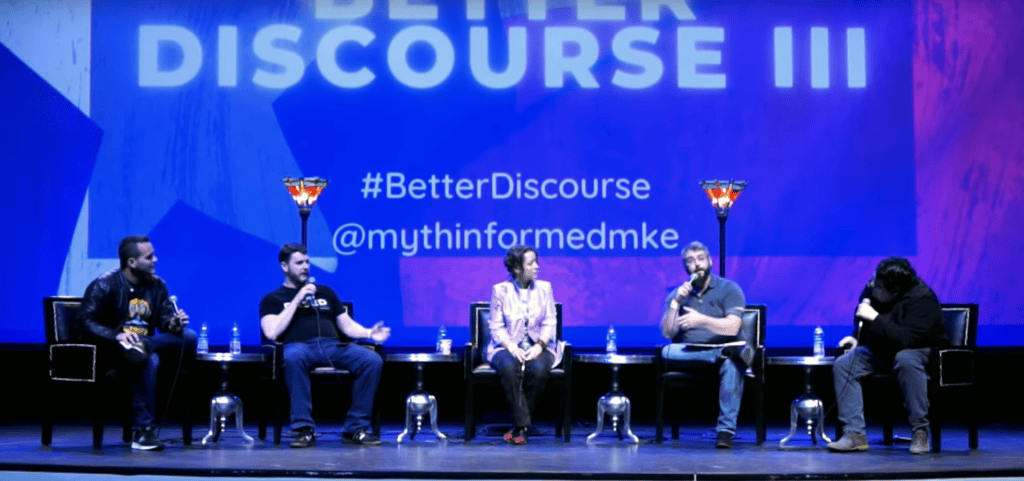
The screenshot is taken from Jangle’s video of the debate.
Debate is a messy thing. When done well, it can illuminate the differences in thinking that people have about a wide variety of issues that would otherwise go unnoticed. However, when the debate goes sour, and the well becomes poisoned, what is left is a mess of conflict and partisanship. And that was on full display at the Better Discourse’s debate panel on Critical Race Theory. Whether it was a consistent lack of charity from its anti-CRT, an inactive and biased moderator, or just a poor framing, the panel was seemingly set to self-destruct it was conceived by the Better Discourse staff.
Video by Justin “Jangles” Gibson.
The panelists included anti-CRT advocate James Lindsay, Sean Fitgerald AKA Actual Justice Warrior, Justin Gibson AKA Jangles Science Lad, and Michael Gonzales AKA Liberal Sanity Project. The debate was moderated by Keri Smith.
Even before the debate began, a staff member poisoned the well, saying, “I think most of us here today have one simple thing in common. We don’t like to be bullshitted. We try our best not to tolerate revisionist history.” It would seem the themes of indoctrination in education couldn’t be held back now, could they?
But the poor showmanship would not end with a hap-hazard announcer but would extend throughout the debate thanks, in part, due to the unending ineptitude of the moderator. Despite the first question being relatively simple, it gets bogged down.
What is Critical Race Theory?
The question of what constitutes C.R.T. has long become increasingly pertinent to modern discourse, in part thanks to political operatives like Christopher Rufo, who has famously worked to misrepresent the work of C.R.T. scholars. But when it comes to actually answering the question, and providing an apt definition, the two anti-CRT guests, Sean and James, veer off into two very different and equally absurd answers.
Fitzgerald, at the beginning of his monologue, argues that there are two types of C.R.T. The first is the actual and original idea of C.R.T., the legal scholarship that derived from the works of Derrick Bell, Kimberle Crenshaw, and Richard Delgado. Though Fitzgerald admits he is uninterested in that specific form of C.R.T. Instead, he focuses on ideas that he believes ‘trickle down’ from C.R.T. and influences new forms of teaching on race and society.
This admission is strange for a variety of reasons, but the main point of contention that I have is how easily Fitzgerald mixes different approaches to addressing racism in America while simultaneously putting all of those approaches under the same banner. It is intellectually lazy, if not outright contradictory, something Gibson points out.
“Yeah, it is also a weird way to frame the debate. So, we are going to talk about Critical Race Theory, but we are not actually going to talk about Critical Race Theory. We are going to talk about what we associate with Critical Race Theory.”
Justin Gibson Critiquing Sean Fitgerald’s framing of CRT.
Gibson points out that C.R.T. attempts to explain how the concept of C.R.T. is usually bogged down by nonsense and sometimes contradictory perceptions of what it is. If anything, Gibson notes, C.R.T. is an attempt to examine disparities among racial groups that they believe are related to previous or continued systemic policies. But when it comes to Lindsay’s response, things get interesting.
BEWARE THE RACE MARXISM
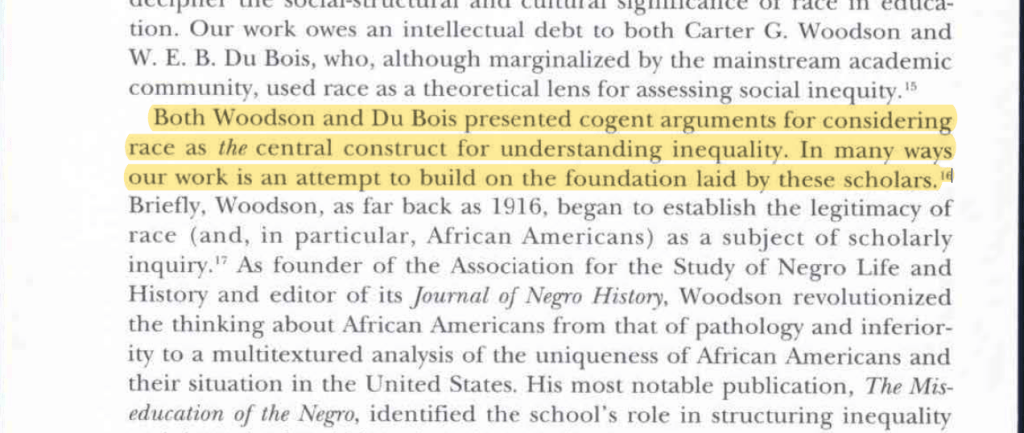
Lindsay’s understanding of C.R.T. as he describes it, comes from an essay titled Toward a Critical Race Theory of Education(Ladson Billings & Tate, 1995). Lindsay’s approach, aside from being strangely named to appeal to his anti-Marxist audience, asserts that Ladson-Billings and Tate saw race as the central component of understanding social inequity. Lindsay is so confident that he asserts that it is a direct quote from their paper. However, a quick look into the paper itself shows that was not what the paper said at all. Instead, the authors were talking about the works W.E.B. Du Bois and Carter Woodson, who emphasized race as a major factor in social inequity. Though they credit much of their approach to these figures, Ladson-Billings and Tate never establish race as the sole factor in American social inequity. Instead, they argue it is “significant.”
Reading through the first few pages of the essay makes it very clear that although the authors are supporting the idea that race should be more thoroughly examined in academia, they aren’t arguing that race should be the sole deciding factor in their analysis. If anything, they’re arguing for the use of race in its own right.
Ladson Billings & Tate, 1995, pg. 51.
This misrepresentation is but one part of the larger lie that Lindsay wants to tell. Throughout his attempted definition of Critical Race Theory, Lindsay cites multiple C.R.T. authors and quotes them extensively, but the fact that he misrepresented the very first authors he cites implicates him as being willfully dishonest. Instead of adequately translating the academic jargon that comes with this work or even bothering to contextualize it, Lindsay prefers to list a series of quotes devoid of context or meaning. And the only one who gets to determine the meaning of those quotes is Lindsay himself, as none of the scholars are there to defend themselves and even fewer audience members even know what Lindsay is doing. See the problem?
Anyone can quote a figure but unless that quote is accurate, it doesn’t mean a thing. He does the same thing with Cheryl Harris’ 1993 paper Whiteness as Property. Instead of examining the factual basis of her arguments and, as a reasonable scholar would do, contextualize them, Lindsay instead puts them into a box of redistributionist or Marxist. The underlying implication of this argument is that the Marxist approach is inherently undesirable and incorrect. It is classic reductionism and red-baiting. Unfortunately, the moderator does not question Lindsay on his points or any of the meaning of these authors. Though there is a reason for that.
Lindsay also fails to understand why C.R.T. even came to be as he fails to explain how C.R.T. grew out of the Civil Rights Movement or how it was distinct from it, choosing to represent it as an oppositional force to its work. But if I went into that, we’d be here all day. Instead, I would like to address the utter absurdity that followed.
LET HIM TALK
Even as the debate proceeds and panelists like Gibson are given the chance to not only respond to the methodological failures of Lindsay’s understanding, Lindsay again inserts himself into the dialogue before his opponent is even given a word in edgewise. As Gibson tries to explain the diverging understandings of C.R.T. within its ranks, Lindsay responds with the childish “Where? Where?” As if repetition would make his approach more salient and meaningful.
It continues constantly. Lindsay’s responses to Gonzales’ point that systemic and overtly racist policies were put in place at the root of society, and those rules, though gone, have influenced our current policy-making. Before he even gets to conclude his remarks, Gonzales is interrupted by Lindsay, who asks the loaded question, “when did those laws end?”
Now, at first, that argument seems salient. The laws are gone, and therefore the effects of those laws should also be gone, right? Except, the underlying argument ignores the lackluster approach the government had when undoing the harms done by those laws. If someone beats another person, stopping them is part of the approach to end the cruelty, but that is not the end of the story. Assisting the person being beaten and easing their trauma, if not wiping it out entirely, is another critical role in ensuring justice is done. Lindsay’s argument ignores that point and deliberately undermines it by preventing it from ever being uttered in the discussion.
And while Gibson rightly jumps in to fight back against the assumptions that Lindsay treated as self-evident, the fact that they are fighting over the assumptions of one man who has done nothing but misrepresent the scholars he claims to cite is evidence of how fundamentally bad-faith this entire debate is. For someone to list off many names and put them into a box with a catch-all name is the height of intellectual dishonesty, and it continued throughout the debate.
And that continues when they actually get into the disparities themselves. But I will get to that in the next article.
Edit: After trying to find the motivation to rewatch the debate, I found the repeated usage of the tactics I outlined in this article by Lindsay too infuriating to examine. It didn’t seem kind to repeat the same points to my audience. This is the only review of the debate I will do.
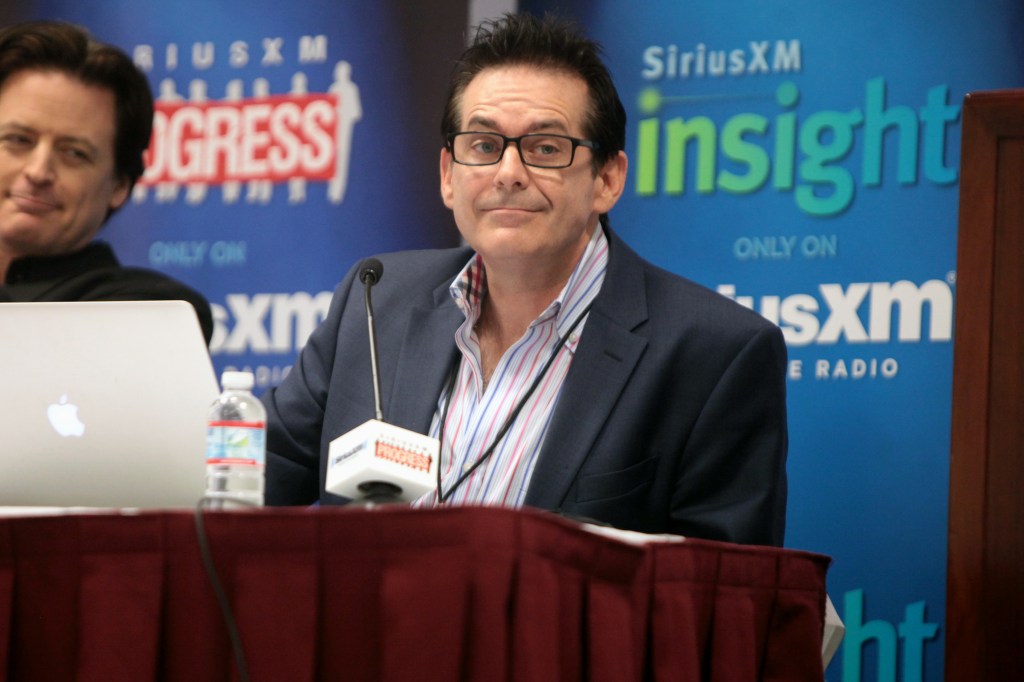
Jimmy Dore speaking at the 2016 Politicon by Gage Skidmore
What is the Left? That question has vexed the American people for the last five years as candidates in both the Democratic and Republican parties have either endorsed or rejected the so-called Left with equal enthusiasm and, in some cases, hostility. And nobody is emblematic of the wrong answer to that question than Jimmy Dore.
Jimmy Dore has a long and sometimes contradictory career. Though he is known now as a political commentator. That is not all that he is. A comedian and commentator, Dore represents the interconnected and sometimes complicated relationship between entertainment and news.
From Comedy To Politics
With experience on broadway, Dore has several years of media experience ranging from appearances on Jimmy Kimmel to podcasts like Comedy and Everything. By 2005, his work veered off into political commentary as he began to integrate clips of politicians into his online comedy, and by 2009, he had his own show, which The Young Turks hosted for several years. However, he left in 2019, which he explained on his show.
Since then, he has been embroiled in several controversies throughout his career. In one instance, Dore seemed to lean into 9/11 conspiracism on the Comedy and Everything podcast, saying:
Why would you need to shame people who question the government’s view of what happened on 9/11? So that’s what makes me suspect. They call them truthers. They name them so you can dismiss them. As soon as you ask a question about 9/11 they go “oh, you’re a truther.”
Jimmy Dore on 9/11
Though not done with his 9/11 trutherism, Dore’s statements on the show are part of a long-standing and consistent rhetorical trick that he has used to avoid criticism for his lackluster reporting. And that rhetoric is on display when Dore talks about vaccines and much more. Much like the conspiracy theorists before him, Dore almost never takes responsibility for any affirmative claims. Instead, he avoids the issue entirely and sows doubt about establishment politics without offering substantiative analysis.
When You Can’t Prove it, Beg The Question
Though not always in the anti-vaccine media scene, Dore has had his criticisms of vaccine policy. In December of last year, Dore posted a video titled Vaccine For Elite But Not For Nurses, in which he critiqued a hospital’s decision to vaccine administrative staff before front-line workers and nurses.
Though a bit generalized in its commentary, the video is not unusual in its critiques of how frontline workers have been treated since Covid-19 started, especially nurses. And it serves as a stark contrast to his future content that he would release months later. If anything, this video alone would suggest that Dore was pro-vaccine and was radically in favor of their usage, if not outright in favor of giving them to for free. A position that this author agrees with fervently. But this position would change, as YouTuber Shaun pointed out in his recent expose.
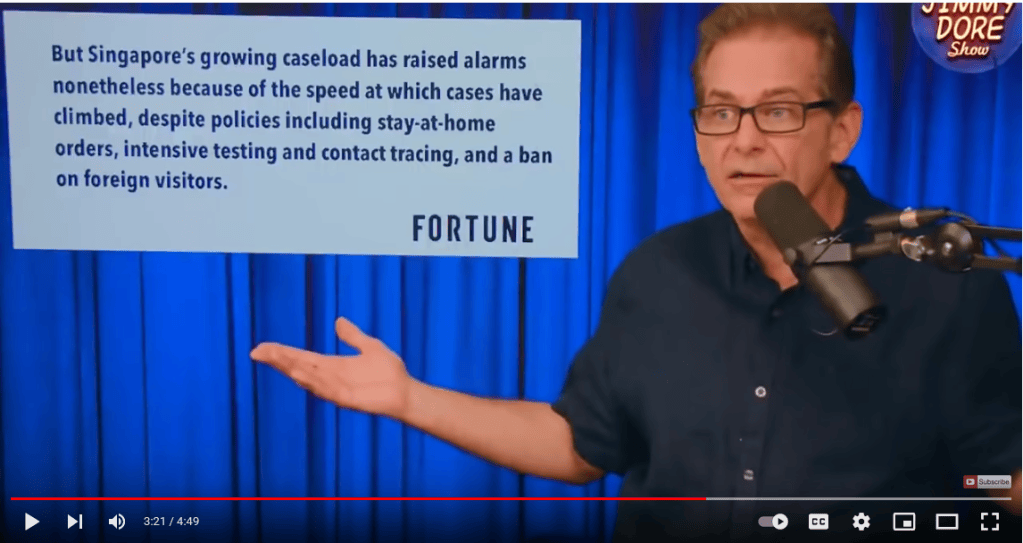
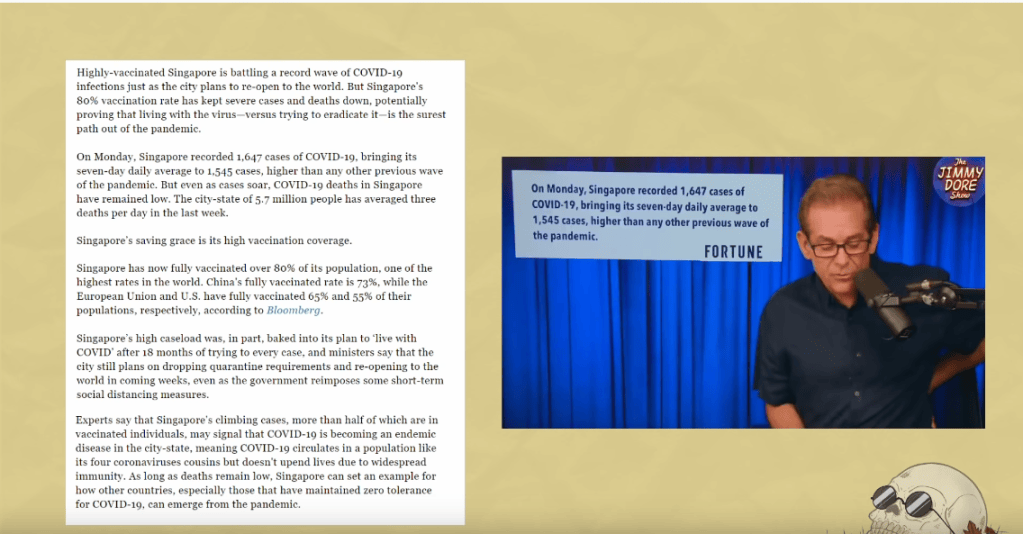
In this recent expose, Shaun rightfully notes that Dore has begun repeating anti-vaccine propaganda. In one of the videos that Shaun examines, Dore incorrectly and deceptively analyzes a Fortune Magazine article titled Highly-vaccinated, but more cases than ever: Singapore shows the world what ‘endemic’ COVID might looklike. Said article details the rise in Covid-19 cases and the vaccination rate in Singapore and how it may be illustrative of how countries may have to live with Covid-19 without outright eradicating it.
Through this article, one could easily gather that Covid-19 may be harder to end and that instead of eradicating Covid-19 entirely, vaccination would likely serve as a means to reduce the harm the virus causes. However, if a person were to watch Dore’s video on the topic, they would come away with the understanding that vaccination doesn’t work, as Singapore’s 80 percent vaccination rate has seemingly failed to prevent covid cases.
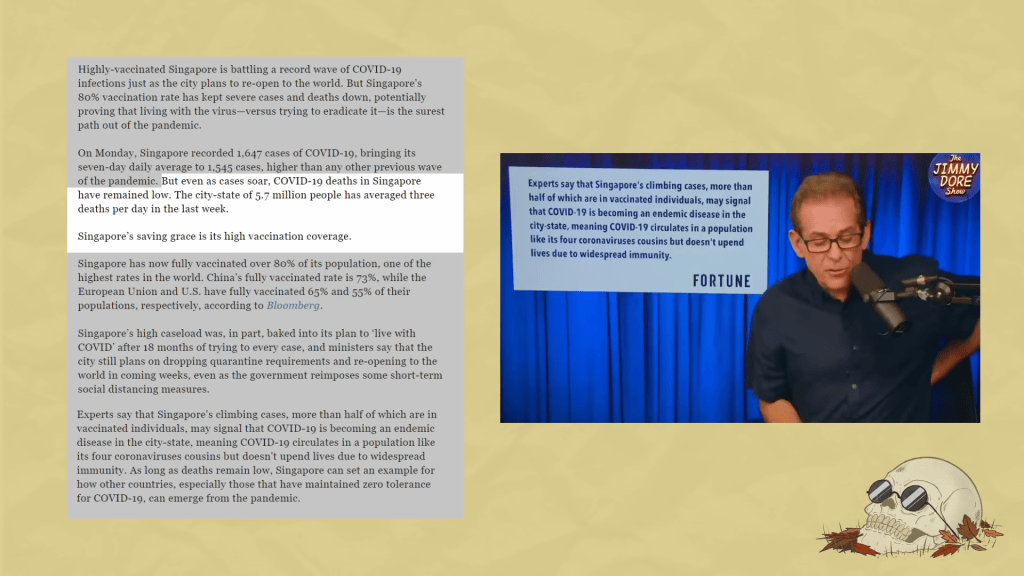
Indeed, that appears by design. In his video, Shaun points out that Dore not only skips the first paragraph, which explains that the vaccination rate has helped mitigate the surge, but that he also overemphasized the rising cases in Singapore.
Screenshot of Shaun’s video.
Nor was it the first time Dore would avoid content that he didn’t approve of, as he once again skipped several paragraphs to fearmonger about Singapore. Dore skips several of the paragraphs that help contextualize Singapore’s health policies and reaches for the argument that Covid-19 is here to stay without explaining what that actually means for everyday people.
Another screenshot showing Dore avoids contextualizing his topics
This pattern continues throughout that video that hopes to scare people into not getting vaccinated. It is a scaremongering piece that, far from just misrepresenting Singapore’s vaccine policies, actively altered entire portions of the article to make it say completely different things, which Shaun rightfully condemned. In the original article, the author wrote that:
“Throughout July and August, cases in Singapore ticked up to over 100 per day after nearly a year of almost no infections due to the city’s previous zero-tolerance policy. That policy included stay-at-home orders, intensive testing and contact tracing, and a ban on foreign visitors. This month, cases have risen exponentially, from 180 on Sept. 1 to roughly 500 by mid-September and to nearly 1,500 this week. “
Grady McGregor, Highly-vaccinated, but more cases than ever, 2021.
Dore, however, presented the paragraph like this.
Keen-eyed viewers will note that Dore has altered the meaning of the text, which previously mentioned that stay-at-home were employed in the past, to a version that made it sound like they were being employed despite their supposed failure to contain covid-19. The word ‘despite,’ which you can see on the screenshot, never appears in the paragraph Dore quotes. In other words, Dore has outright rewritten somebody else’s work to make them say something that they never said. That alone is insulting to the author’s credibility but is also damaging to the validity of Dore’s entire channel, assuming it gains the attention it deserves, of course.
Though, I suspect that it got some attention, as Dore has released a response to the expose.
From the beginning of the expose, Dore lists a litany of previous conflicts to appear more sympathetic, arguing that establishment Democrats were arguing that if everyone got the vaccine then Covid would go away. There are three problems with that approach. The first is that the clip he shows of Speaker Pelosi does not say anything remotely like that, and the second is that not everyone is vaccinated. Just recently, the FDA approved Pfizer’s vaccine for kids aged 5 through 11, opening up a portion of the population that was previously unavailable. The third is that he hawks Dr. Robert Malone, who has repeatedly made the repeated claim that he created or, at the very least, invented the MRNA technology that now goes into many of the Covid-19 vaccines we now use. However, that is suspect.
More to the point, however, Dore’s video is a grievance list that covers up the fact that his show misrepresented someone else’s work to support anti-vaccine talking points. And instead of acknowledging that reality, Dore instead reasserts a point that he has only been making because it appeals to his audience. But when addresses the key issue at hand, he blames his producer.
Jimmy Dore dubiously blames his producer for manipulating Fortune article: "Unfortunately, he can't be with us anymore because I can't have someone on like that who's sloppy, stupid, and does something like that. Someone's paying the price for this." pic.twitter.com/4M5Tg7hLWz
Not only does Dore blame his producer, but he argues that it was his producer who put together the story and, by extension, made him make this argument. If true, then Dore is still guilty of gross incompetence and laziness. Hosts are responsible for the content they put out and no matter how much they may want to blame their failures on staff, the buck stops with them. Whether or not it was his producer, Dore still could’ve read the article and questioned his producer about editorial choice, but chose not to. And considering that he has consistently hawked figures like Malone who have their own history with anti-vaccine advocates, it would not surprise this writer to learn that he was the one who approved the changes in the first place.
Though, before this ends, it should be noted that Dore is marching along a thin line here, as YouTube has banned all anti-vaccine content from its platform. According to its terms of service, users can be banned for making “claims that COVID-19 vaccines do not reduce risk of contracting COVID-19.” Dore avoids crossing that line by virtue of implying that very thing while not outright saying it. However, if YouTube were to take said evasions of policy seriously, it would not unreasonable to expect Dore’s channel to be deleted, but considering YouTube’s previous failures in moderation, I wouldn’t expect it.
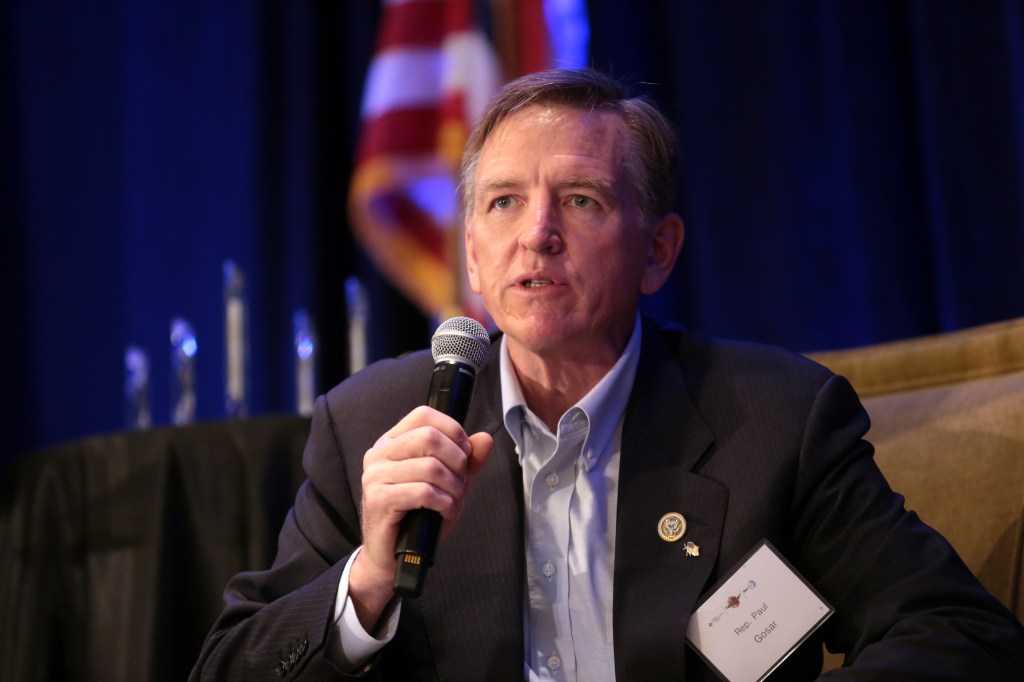
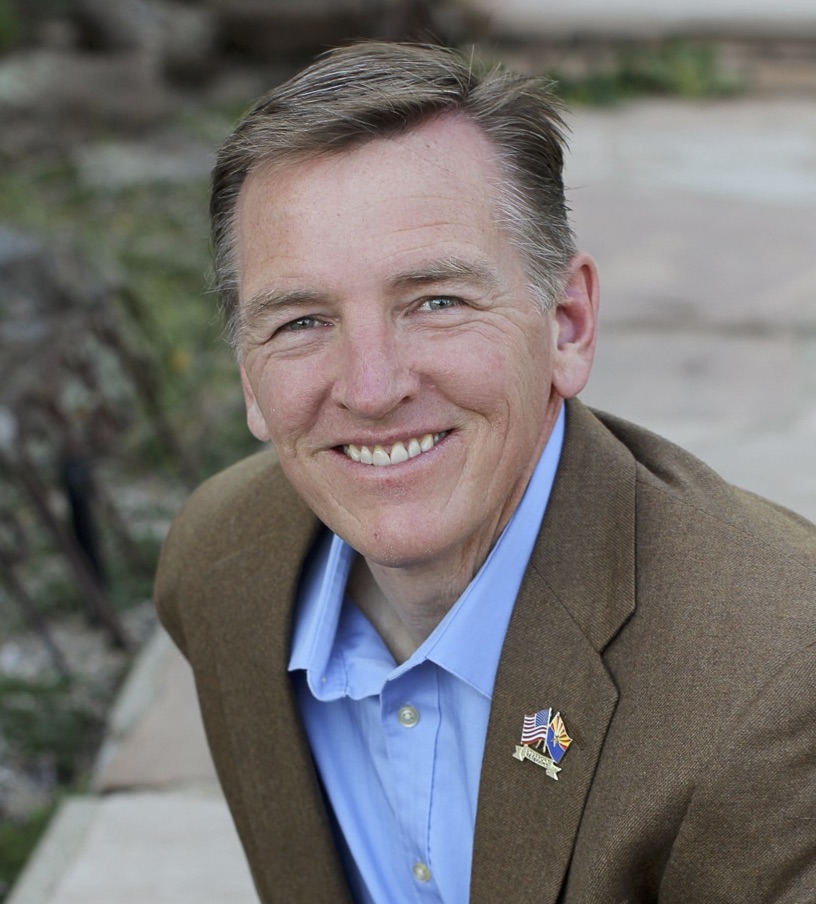
Paul Gosar Official Portrait, 2016 via Wiki Commons
When writing on politics, it is almost certain that weird and infuriating stories will pop up. The adage, “never attribute to malice that which can be adequately explained by stupidity,” is usually the best description of peculiar political news. However, the recent news about Rep. Paul Gosar’s disrespectful and downright ridiculous decision to encourage violence against President Biden and Rep. Ocasio-Cortez puts that axiom to the test. Such actions can only come about by a perverted mix of stupidity and malice. The very idea that a sitting member of the House of Representatives would dare to post a tweet depicting the kill of a colleague in Congress, as well as the murder of the President, is itself asinine. And yet, here.
Earlier this week, Gosar tweeted a strange post with him depicted as an anime protagonist from the famed anime Attack on Titan. In the now-deleted tweet, Gosar depicts himself with his colleagues, Rep. Lauren Boebert and Marjorie Taylor Greene, fighting large monsters with the image of President Biden and Rep. Ocasio-Cortez. The video depicts Gosar and his allies ending the two Democrats’ rampage with one of the characters slicing through the back of Ocasio-Cortez’s neck.
Despite the obvious depiction of violence involved, Republicans, both state and national, have done little to condemn the move. House Republicans have made no comments on the strange video, which Gosar has yet to apologize for or in any way admit wrongdoing. In one instance, the Chairwoman for the Arizona GOP addressed the video with mockery, tweeting, “Does this mean Gosar can really fly, too?”
Does this mean Gosar can really fly, too? OMG! I never knew cartoons were real 😱😱😱 https://t.co/4yeY3VmxEi
The implication of Ward’s comments is clear as day. Media, no matter what it depicts, has no bearing on the actions of others. However, the reality does not support this hastily-accepted argument. Nor does it match what Ward previously said when Kathy Griffin posed with the fake head of Donald Trump. In fact, Ward used the image of Kathy Griffin for fundraising purposes with a caption that read, “the Left has become dangerously unhinged. Your President needs you.”
Hypocrisy aside, the idea that media has no impact on the political discourse seems laughable in the face of the pandemic, the attack on the capitol.
To this day, Republicans believe that the election was stolen, with 62 percent of Republicans asserting that voter fraud altered the election results. They are wrong. Media outlets like Newsmax and Fox helped propagate this myth, and it contributed to the death of five people on that infamous day in January.
It is bad enough that Gosar associates with far-right neo Nazis like Nick Fuentes, but the fact that he will almost certainly escape consequences for his actions is an indictment on our political system. If there is to be any calm in this tumultuous political environment, consequences have to follow. Basic decency demands it.
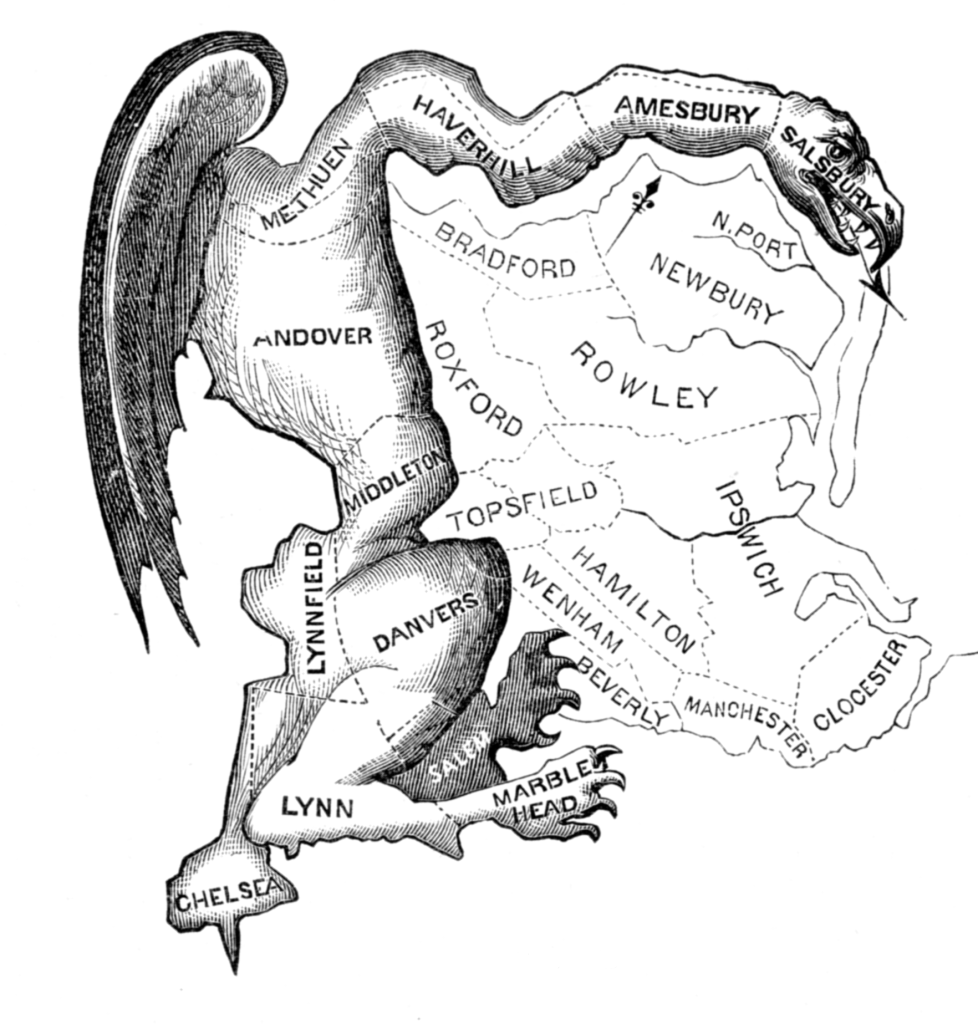
With the loss in Virginia, many Democrats are worried about the next few years and what they mean for the party. And with the redistricting of congressional districts occurring across the country, Democrats are in an even more precarious position. This process, which occurs every ten years, is as politically intense as it is shameful. Every decade, state legislatures redraw their congressional districts. In many cases, the objective is to stack the deck for their party to win as many districts as possible irrespective of the people’s will. Across parties, this self-dealing continues unabated, and the worst part is that it is completely legal.
The Power of The Map
Across the country, Democrats are at a disadvantage, as most of the state legislatures are controlled by Republicans. The effects of that reality are all too clear. In Texas, legislatures are already making plans to offset increases in non-white voters by rewriting their districts to diffuse those voters’ concentration in a given district. The result is nothing short of amazing.
A New York Times analysis found that districts counted as ‘toss-ups’ in 2020 would now be overwhelmingly Republican if the proposed map was accepted. In the 10th Congressional District, the Republicans’ 2 point lead will rise to an insurmountable 20 point stronghold. The power of redistricting in Texas alone is immense, and the consequences are national in scale. Earlier this year, Texas was the only state to gain 2 seats by reapportionment alone. To add to this, Republicans are planning to split districts surrounding Dallas’ metropolitan area and spread its voters in with more rural, Republican voters, creating an entirely new district under Republican control.
Democrats are far from innocent in this process. Illinois Democrats are planning a similar move with their control over redistricting. Once completed, Democrats will likely have cut out Rep. Adam Kinzinger’s 16th district, making Illinois one of the “most gerrymandered states in the country.” Democrats would likely gain two seats, leaving 14 Democrats and 3 Republicans to represent the state in Congress. Illinois is losing a seat, however, due to reapportionment.
Even when considering the problems with Illinois, Republicans are undeniably the main beneficiaries of gerrymandering. The GOP has the power to redraw 187 congressional districts compared to the Democrat’s 75. By redrawing the districts in Florida, Georgia, Texas, and South Carolina, Republicans could gain as many as 13 seats in the House, ensuring a majority for the GOP.
Racism and Partisan Gerrymandering
Despite the obvious corruption of such a system, political gerrymandering is not illegal, per se. In Rucho v. Common Cause (2019), the Supreme Court heard two cases involving partisan gerrymandering. The Women League of Voters of North Carolina sued the state over redrawing, alleging that the state was engaging in illegal partisan gerrymandering. Similarly, Common Cause also sued the state, alleging the same.
In a 5-4 decision, Chief Justice John Roberts and his conservative colleagues ruled that the question of partisan gerrymandering constituted a “political question” beyond the federal government’s jurisdiction.
In the majority opinion, Roberts argued that: “We conclude that partisan gerrymandering claims present political questions beyond the reach of the federal courts…Federal judges have no license to reallocate political power between the two major political parties, with no plausible grant of authority in the Constitution, and no legal standards to limit and direct their decisions.”
Official portrait of U.S. Supreme Court Chief Justice John G. Roberts.
The problem with this perspective is easy to see. A legislature could easily map out a district with the clear intent to dilute a racial group’s political power without expressly doing so, just as Texas is doing right now.
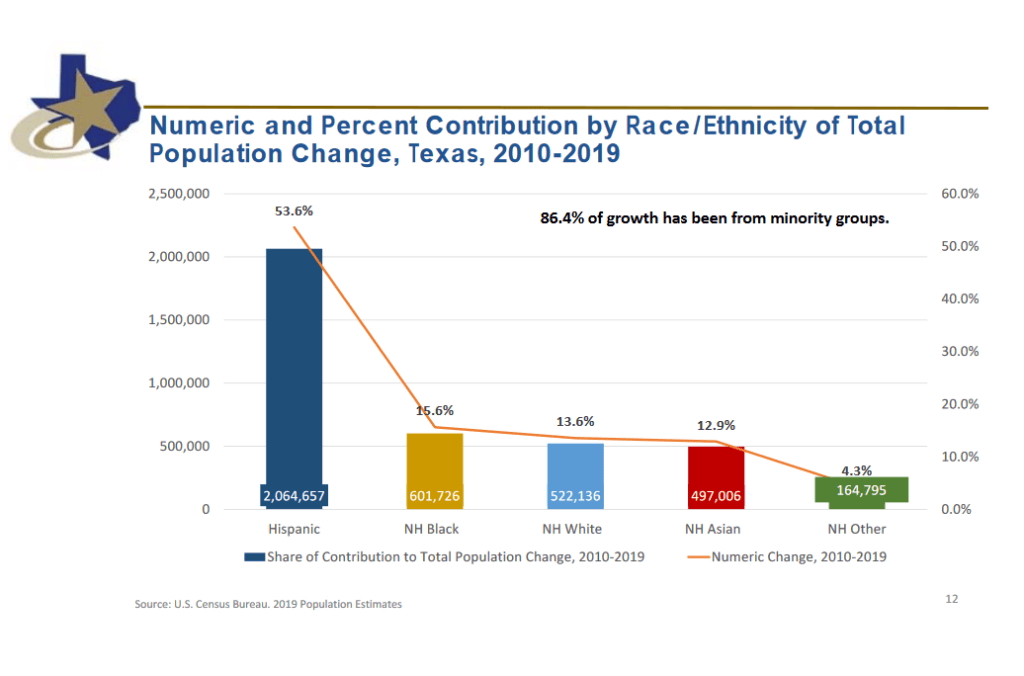
Texas’ Hispanic population continues to grow significantly, outpacing any other group. Between 2010 and 2019, the Hispanic population accounted for 53.6 percent of the population increase in the state, with 84 percent of Texas’ increase in population coming from minorities. Nationally, the Hispanic population increased by 52 percent, making Hispanic voters the rising share of the electorate.
Texas Demographic Center, 2020.
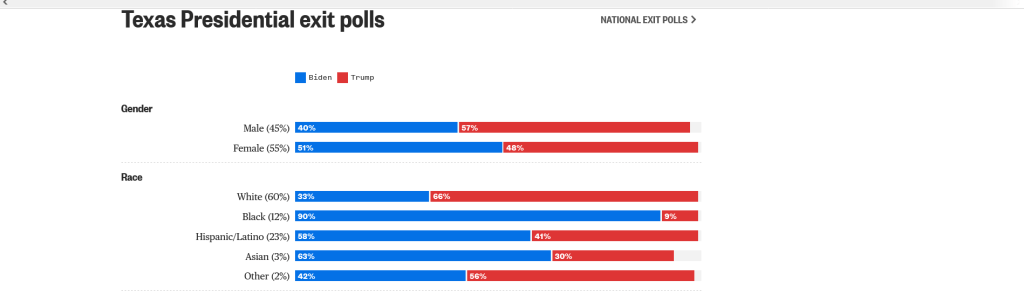
With this rise in Hispanic voters come more Democratic voters, something that is certainly starting Texas Republicans. During the 2020 presidential election, 58 percent of Hispanic voters voted for Joe Biden, compared to 41 percent who voted for Donald Trump. Though not as strong in their party identification as Black Americans, Hispanics represent a serious challenge to the status quo in Texas and around the United States.
Republicans in Texas have pulled out their pens and plan to dilute this new voting block in response to this new political force. Splitting Western Texas and Eastern Irving, Republicans hope to split the Latino vote into the 6th, 24th, 25th, and 33rd districts, ensuring the influence of Latino votes never reaches the level of power that a just system would allow. In other words, a clearly racial policy takes on a political perspective and, through that perspective, justifies itself to the Court despite the prejudiced nature of the decision.
So What Now?
The Court’s decision mentioned above makes such a suit incredibly difficult. It is unlikely that any new lawsuit will overturn the gerrymandering anytime soon. However, states still retain the right to decide how to organize their redistricting. And after these districts are established, they remain that way for ten years. Meaning that the public has ten years to organize and pressure their state leaders to establish independent commissions to redraw their districts, taking power out of the hands of their legislatures. Several states already do this, though 33 still maintain the legislature-oriented model.
It will take significant effort and long-term effort, but unless there is an amendment to the Constitution or the Court has more justices added soon, it is the only way to end the continued abuse of the electorate. So long as legislatures continue to control redistricting, our democracy will remain under the thumb of the powerful.
The Virginia governor’s office will not belong to Democrats in an upset that suggests Democrats could be in for a world of hurt in the midterm election. Republican candidate and now Governor-elect Greg Youngkin won the state with 50.9 percent of the vote, an extremely close and downright disturbing result to see in a state that Joe Biden won by 10 points. His opponent, former governor Terry McAuliffe, had several missteps in his journey to return to office. Despite having the endorsement of current governor Ralph Northam and former President Barack Obama, McAuliffe failed to push the issues and, by extension, failed to win over the votes in a state that should have been his for the taking.
Lacking Support and The Trump Effect
While historical parallels can explain what happened here, there are also fundamental problems that activists have struggled to deal with for years: voter apathy. Since early October, McAuliffe struggled to match voting enthusiasm among his voters, with only 44 percent of his voters saying they were motivated to vote compared to Youngkin’s 50 percent. This flies in the face of the overwhelming and historic voter turnout Biden managed to secure in 2020, suggesting that Democrats, and perhaps even Biden, are not as politically strong without the Trump effect.
There is some evidence to suggest that Trump’s influence and the lacking presence of his toxic personality helped Youngkin. One poll shows that Democrats are convinced that Youngkin supports Trump too much, with Republicans saying the opposite, but among Independents were much more mixed in their view. Among independents, 46 percent said Youngkin supported Trump too much, and 41 percent said he supported the former president at just the right level. To put this another way, the attempts to make Youngkin look like a Trump stooge were, at best, minimal in their success.
Those two factors are important for a variety of reasons, but the fact that McAuliffe could not lock onto his less experienced opponent and get a sense of who his voters were supposed to see him as is a major part of why his campaign was so flaccid at the end of the campaign. When facing an opponent, it is critical to give your voters something or someone to fight for, or at the very least, give them something to support. McAuliffe’s failure to do that is partially to blame for this loss.
Biden’s Approval Rating
While it is difficult to ascertain how much Biden hurt McAuliffe’s chances and most recent presidents have seen declines in their approval ratings, as I noted before. But there is little reason to believe that Biden didn’t harm the former governor’s chances. Exit polls showed that 53 percent of Virginians disapproved of Biden’s performance as president compared to 46 percent who said they approved. A solid 90 percent of Youngkin voters also disapproved of Biden.
It isn’t too surprising that a majority of Republicans would disapprove of their opponent, but the degree to which they did, combined with the percentage of the state who dislike him despite voting him in just a year ago, speaks volumes about the influence of Biden’s presence in the election. This is especially true when you consider that Democrats have won every statewide race and four presidential elections in the state since 2009. While it is possible that Biden’s approval will recover, and as I argued before, that does not mean its current state was helpful for McAuliffe. There will be more examinations of the data, of course, but for now, it seems as though Biden lurked over the election field in ways that he probably didn’t want.
Critical Race Theory and Familial Control
This one is a bit more difficult. It would be a mistake to say that CRT was the only reason for this victory, but it is equally mistaken to ignore its role. Education and the economy were the top two issues that dominated the polls, with 24 percent of voters saying that education was their main issue. And while education is generally a vital issue for Democratic voters, the use of CRT as a cudgel changed that game. Previously, education voters favored McAuliffe, but by the end of October, Democratic fortunes soured. When faced with a campaign by Youngkin criticizing McAuliffe for opposing a bill that would allow parents to veto certain books in school, McAuliffe infamously responded, “I don’t think parents should be telling schools what they should teach. The parents had the right to veto books… also take them off the shelves… I’m not going to let parents come into schools and actually take books out and make their own decisions.” This move played into the narrative that McAuliffe and other Democrats were trying to force a certain perspective on parents and their children irrespective of their choices.
This isn’t to say CRT itself decided the election, as other states saw anti-CRT candidates lose their races. In New Hampshire, Democratic Mayor Andrew Hosmer won reelection over his staunchly anti-CRT opponent, who falsely claimed that anti-bias training in schools was an example of ‘racist’ Critical Race Theory. In Connecticut, yet another anti-CRT candidate lost in a local race. But the fact that McAullife played into the narrative that Youngkin was creating does suggest that, if given proper cultivation, anger at establishment politics can sometimes persuade voters to accept nonsensical claims about education and other policy, turning them to vote for a candidate that they otherwise would not.
They’re Just Not Into You
While it is tempting to see the Virginia elections as evidence of Biden’s unmitigated failure or the fall of Democratic political power, the candidate himself needs to be considered. Though McAuliffe was a well-rounded candidate with strong connections, he never possed the reputation or the groundswell of support that other candidates before or after him had. Nor did he ever reach a majority of the vote in his previous runs for governor. In 2013, when he won his seat, McAuliffe won with only 47.8 percent of the vote, just 2.6 points above his opponent. It is also worth mentioning that a third-party candidate on the Libertarian ticket took home 6 percent of the vote in the same year, meaning that McAuliffe never had the political strength to secure reelection in the first place. There was no popular mandate for Terry McAuliffe to return to Richmond.
What Now?
While Republicans are sure to celebrate the results of their victory, albeit a close one, the questions over how effectively they will govern remain unanswered. They may gain a majority in Virginia’s legislature, but their control is far from guaranteed, nor is there is evidence to suggest it will be permanent if it exists at all. That said, Democrats’ failure to adequately deal with the issues on the ground, overemphasis on Trump, and their fundamentally bad candidate choice should serve as a warning for Democrats across the United States. Relying on traditional candidates without offering anything new and inadequately responding to culture war propaganda is a recipe for failure that Democrats can ill-afford deal with. A new strategy is necessary.